

Johnny Kent
Famous or "King Cobras"
from the Battle of Britain era and early WW2
Extraordinary men in an exceptional Squadron
Please click on an image for a short biography


John Drummond
Allan Wright
Don Kingaby
Alan Maclachlan
James Rankin
John Villa

Tony Bartley
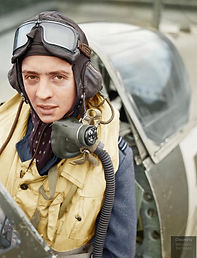
Richard "Dickie" Milne
Group Captain John Alexander Kent, DFC & Bar, AFC

John Alexander Kent, affectionately known as “Kentowski”, was a distinguished Canadian-born Royal Air Force fighter pilot and test pilot, best remembered for his service during the Battle of Britain and his leadership of Polish fighter squadrons in the RAF.
Born on 23 June 1914 in Winnipeg, Manitoba, Canada, Kent developed an early fascination with aviation and learned to fly at a young age. In 1935, seeking to pursue a military flying career, he joined the Royal Air Force and was posted to No. 19 Squadron at Duxford, flying the Gloster Gauntlet biplane fighter before converting to the new Supermarine Spitfire.
Kent soon demonstrated both flying skill and a natural flair for leadership. Before the war, he became a test pilot at the Royal Aircraft Establishment, Farnborough, where he flew and evaluated numerous prototype and frontline aircraft — work that earned him the Air Force Cross (AFC) in 1939 for his contribution to flight testing and aviation safety.
With the outbreak of the Second World War, Kent was posted to operational command. During the Battle of Britain in 1940, he served first with No. 303 (Polish) Squadron at Northolt — one of the RAF’s most successful fighter units. His courage and rapport with his Polish comrades earned him the affectionate nickname “Kentowski.” He later commanded No. 92 Squadron, flying both Spitfires and Hurricanes in intense air battles over southern England.
For his leadership and gallantry, Kent received the Distinguished Flying Cross (DFC) and later a Bar to the DFC, as well as the Virtuti Militari (Fifth Class) from Poland — one of that nation’s highest decorations for bravery.


Following the Battle of Britain, Kent continued to serve with distinction in a variety of roles. He commanded No. 616 Squadron, one of the first RAF units to operate the Gloster Meteor, the RAF’s first jet fighter. His post-war career included several senior staff and command appointments, where he played a key role in integrating jet aircraft into RAF service and training doctrines.
Promoted to Group Captain, Kent retired from the RAF in the early 1950s and later worked in civil aviation, continuing his lifelong association with flying.
Group Captain John Alexander Kent passed away on 7 October 1985.
His legacy endures as that of a pioneering pilot, a steadfast leader, and one of the few who successfully bridged the era from open-cockpit biplanes to the dawn of the jet age. The story of “Kentowski” remains a testament to Allied cooperation and the enduring spirit of the Royal Air Force.

Reading Johnny Kent's book "One of the Few" this is what he writes about 92 as he takes over command having left 303 Squadron. I wonder if fellow Cobras will read it with a wry smile and a bit of pride like me!
"I have studied my Officers behaviour with concerned and frankly I think it stinks. You are the most conceited and insubordinate lot I have ever had the misfortune to come up against.
Admittedly you have worked hard and got a damn good score, in fact a better score than any squadron in fighter command but your casualties have been appalling, these losses I attributed to the fact that your discipline is slack, you never by any chance get some sleep, you drink like fishes and you've got a damn sight too good an opinion of yourselves. Now your bilets. It appears that you have turned the living quarters which were allotted to you, to provide a certain amount of security and rest, into a nightclub.
It also appears that you asked your various lady friends down to spend weekends with you whenever you please. This will cease. All women will be out of the house by 2300 hours sharp. Your clothes, I can scarcely call them uniform. I will not tolerate check shirts, old school ties or Suede Shoes. While you are on duty you will wear the regulation dress. Neither will I tolerate Pink Pyjamas under your tunics. Finally, I want to see an all-round improvement. At the moment I think you're a lot of skunks."
Bloody legends those Cobras!

-
Service Details
-
Service Number: 42664
-
Rank: Flying Officer
-
Unit: No. 92 Squadron, RAF
-
Aircraft: Supermarine Spitfire Mk I
-
Theatre: Battle of Britain (1940)
Flying Officer John Fraser Drummond, DFC, was a distinguished Royal Air Force fighter pilot and one of the courageous young men who fought and died during the Battle of Britain. His service exemplified the dedication, bravery, and sacrifice of the RAF’s early-war generation.
John Fraser Drummond was born in Liverpool, England, in 1918. He was educated at Clifton College, Bristol, where his enthusiasm for aviation and sport was already apparent. He joined the Royal Air Force Volunteer Reserve (RAFVR) in 1938, where he trained as a pilot prior to the outbreak of the Second World War.
When war came in September 1939, Drummond was called to full-time service and soon joined No. 92 Squadron RAF, a newly reformed fighter unit that would become one of the best-known squadrons in Fighter Command. Flying the Supermarine Spitfire, Drummond quickly demonstrated skill and aggression in aerial combat.
During the Battle of Britain (July–October 1940), Drummond flew numerous sorties from RAF bases such as Croydon and Biggin Hill. He achieved several confirmed victories against Luftwaffe aircraft, including Messerschmitt Bf 109 fighters and Heinkel bombers. His courage and leadership at a time of intense air fighting earned him the Distinguished Flying Cross (DFC), announced in September 1940.
Tragically, Flying Officer Drummond was killed in action on 10 October 1940, at the height of the Battle of Britain. He was just 22 years old. His Spitfire (serial R6616) was shot down during combat with German fighters near Tunbridge Wells, Kent. Drummond’s death came only weeks after receiving his DFC for “great courage and devotion to duty in the face of the enemy.”
He is buried at Haycombe Cemetery, Bath, Somerset.
Drummond’s legacy remains intertwined with that of No. 92 (East India) Squadron, whose pilots — including Allan Wright, Bob Stanford-Tuck, and Geoffrey Wellum — became synonymous with the RAF’s finest hour. His name is recorded on the Battle of Britain Roll of Honour at Westminster Abbey.


Service Details
-
Service Number: 90149
-
Rank: Group Captain
-
Unit: No. 92 Squadron, RAF
-
Aircraft: Supermarine Spitfire Mk I
-
Theatres: Dunkirk and Battle of Britain (1940)
Group Captain Allan Richard Wright, DFC & Bar, AFC, was one of the distinguished Royal Air Force fighter aces of the Second World War. Known for his calm professionalism and remarkable combat skill, Wright was among the leading pilots of No. 92 (East India) Squadron, flying the iconic Supermarine Spitfire during the Battle of Britain.
Born on 12 February 1919 in Teignmouth, Devon, Allan Wright was educated at Sherborne School before joining the Royal Air Force on a short service commission in 1938. After completing his training, he was posted to No. 92 Squadron RAF, which re-formed in early 1939 and soon equipped with Spitfires.
Wright’s combat career began in earnest in the summer of 1940, as the Luftwaffe began its campaign against Britain. As one of 92 Squadron’s original pilots, he took part in many fierce engagements over southern England. On 23 May 1940, during operations over Dunkirk, he destroyed several enemy aircraft, earning the Distinguished Flying Cross (DFC) for his courage and determination. A Bar to his DFC soon followed for further gallantry during the Battle of Britain, in which he was officially credited with 11 confirmed victories, 3 shared, and several probables.
In September 1940, Wright was wounded when his Spitfire was hit during combat with Messerschmitt Bf 109s over Kent. He crash-landed his aircraft and spent several months recovering before returning to operational flying and later assuming instructor and staff duties. His experience and tactical understanding made him an invaluable asset to Fighter Command.
After the war, Wright remained in the Royal Air Force, serving in various senior flying and training appointments. His peacetime service earned him the Air Force Cross (AFC), recognising his contribution to aviation and flight instruction. He retired from the RAF in 1967 with the rank of Group Captain.
Allan Wright was the last surviving Battle of Britain pilot from 92 Squadron and one of the final remaining veterans of that historic conflict. He passed away on 16 September 2015, aged 96 — fittingly, on Battle of Britain Day.
He is remembered as a quiet and modest man whose courage, skill, and leadership helped define the RAF’s finest hour.


Service Details
-
Service Number: 58037
-
Rank: Squadron Leader
-
Units: No. 266, No. 92, No. 64, and No. 122 Squadrons, RAF
-
Aircraft: Supermarine Spitfire
-
Theatres: Battle of Britain, Channel Front Operations, Western Europe
Squadron Leader Donald Ernest Kingaby was one of the Royal Air Force’s most accomplished fighter pilots and the only airman ever to be awarded the Distinguished Flying Medal (DFM) three times. His remarkable record of gallantry and skill made him one of the outstanding RAF aces of the Second World War.
Born on 7 January 1914 in Norwich, Norfolk, Kingaby was educated locally and worked in insurance before joining the Royal Air Force in 1938 as an aircraftman (AC2). After training as a pilot, he was posted to No. 266 Squadron RAF, flying the Supermarine Spitfire, before transferring in May 1940 to No. 92 (East India) Squadron, one of the most distinguished fighter units of the war.
During the Battle of Britain, Kingaby quickly proved himself a determined and accurate fighter pilot. His coolness under fire and exceptional marksmanship earned him the Distinguished Flying Medal (DFM) in October 1940 for “great courage and devotion to duty.” By the end of the battle, he had destroyed or damaged numerous enemy aircraft.
He received a Bar to his DFM in February 1941 for further victories and leadership, and a Second Bar in August 1941—an achievement unique in RAF history. Commissioned as an officer in 1941, Kingaby went on to command No. 64 Squadron and later No. 122 Squadron, participating in offensive sweeps over occupied Europe. His total combat score is credited as 21 enemy aircraft destroyed, with several more probable and damaged.
For his continued gallantry and leadership, Kingaby was awarded the Distinguished Service Order (DSO) in 1943. After the war, he remained in the RAF, serving as a flying instructor and test pilot, later receiving the Air Force Cross (AFC) for his outstanding service to aviation.
Donald Kingaby retired from the Royal Air Force in 1958 with the rank of Squadron Leader. In civilian life, he worked in public relations and remained active in RAF commemorative events, particularly those associated with the Battle of Britain and 92 Squadron.
He passed away on 17 December 1990, aged 76, and is remembered as one of the most decorated and courageous fighter pilots in RAF history.


Alan Moncrieff MacLachlan (usually recorded as A. M. MacLachlan) served with the Royal Air Force during the crucial months of 1940 and is listed among the pilots of No. 92 (East India) Squadron during the Battle of Britain.
MacLachlan was called to full-time service on 24 August 1939 and initially served as a flight commander with No. 600 Squadron. He was detached to HQ 11 Group on 25 March 1940, and records show he relinquished the rank of Acting Squadron Leader on 18 May 1940. After a refresher course and conversion to Spitfires at 7 OTU (Hawarden), he was attached to 92 Squadron at Biggin Hill on 26 September 1940 as a supernumerary officer. He took over command of 92 Squadron on 2 October 1940, during a fast-moving period for Fighter Command, and was posted away on 25 October 1940 when Squadron Leader J. A. Kent arrived to assume command.
These movements are recorded in the squadron histories and airmen summaries. bbm.org.uk+1
MacLachlan’s subsequent wartime service is sparsely documented in public online sources, but official notes indicate he continued in the RAF and was released from service in 1945 with the rank of Wing Commander. Several squadron member lists and 92 Squadron histories list him as joining the unit in 1940 and show him in the sequence of squadron commanders. He is believed to have emigrated to Canada after the war and to have died in 1976.

Air Commodore James Rankin, DSO & Bar, DFC & Bar

Service Details
-
Service Number: 37037
-
Rank: Air Commodore
-
Units: No. 25 Squadron, No. 92 Squadron, No. 124 Wing
-
Aircraft: Supermarine Spitfire
-
Theatres: Battle of Britain, Western Europe, Normandy Campaign
Air Commodore James Rankin was one of the Royal Air Force’s most distinguished fighter leaders of the Second World War, credited with 17 confirmed aerial victories. A skilled tactician and respected commander, Rankin served with distinction in No. 92 (East India) Squadron and other elite Spitfire units, later rising to senior rank in the post-war RAF.
Born on 5 May 1913 in Aberdeen, Scotland, James Rankin was educated at Aberdeen Grammar School and Aberdeen University before joining the Royal Air Force in 1935 on a short service commission. After completing flying training, he joined No. 25 Squadron, flying night fighters, before moving to day-fighter operations as war approached.
In 1940, Rankin was posted to No. 92 Squadron RAF, then forming at Croydon under Squadron Leader Roger Bushell and later commanded by Brian Kingcome and others. Flying the Supermarine Spitfire, he participated in the Battle of Britain, scoring several victories against the Luftwaffe. His courage and leadership quickly marked him out for higher command.
By 1941, Rankin had established himself as one of Fighter Command’s most reliable and effective leaders, earning the Distinguished Flying Cross (DFC) and later a Bar for further gallantry in combat. His combination of tactical skill and steadiness under fire inspired those who flew under him.


Rankin’s most notable operational command came in 1944, when he led the Supermarine Spitfire Mk IX–equipped No. 124 Wing during the Normandy invasion. His wing flew intensive fighter sweeps, escort, and ground-attack missions over France and the Low Countries in support of the Allied advance. For his outstanding leadership during these operations, he was awarded the Distinguished Service Order (DSO), followed by a Bar to the DSO for continued gallantry and success in the closing months of the war.
After 1945, Rankin remained in the RAF, rising steadily through the ranks. His later career included senior staff and command appointments in Fighter Command and Air Defence, and he retired as Air Commodore in 1960.
Air Commodore James Rankin passed away on 16 June 1975, aged 62. He is remembered as one of the RAF’s quietly capable and highly effective fighter commanders — a man whose leadership, integrity, and courage earned him the deep respect of his peers and subordinates alike.


Squadron Leader John Wolferstan Villa, affectionately known as “Pancho”, was one of the outstanding fighter pilots and leaders of the Royal Air Force’s No. 92 (East India) Squadron during the Second World War. His combination of courage, skill, and quiet professionalism earned him widespread respect among his peers and two awards of the Distinguished Flying Cross (DFC).
Born in 1919, John Wolferstan Villa was educated in England and joined the Royal Air Force Volunteer Reserve (RAFVR) prior to the outbreak of war. After completing pilot training, he was posted to No. 92 Squadron RAF, flying Supermarine Spitfires — one of Fighter Command’s most famous units, renowned for its fighting spirit and distinctive blue spinner markings.
Villa first saw operational action during the latter stages of the Battle of Britain, flying defensive patrols from Biggin Hill and later from Manston. He quickly earned a reputation for calmness under pressure and exceptional flying skill. His first Distinguished Flying Cross (DFC) was awarded for “gallantry and devotion to duty in the face of the enemy,” recognising both his personal combat successes and his contribution to maintaining his squadron’s high morale under heavy pressure.
In 1941–42, Villa continued to fly operationally over occupied Europe, participating in offensive sweeps and fighter escorts over France and the Low Countries. His leadership and example during these hazardous operations earned him a Bar to his DFC, marking a second official recognition of his courage and ability.
By 1943, Villa had become a Flight Commander, and later Squadron Leader, taking on increasing responsibilities in training and operational leadership within Fighter Command. His tactical awareness and steady manner made him one of 92 Squadron’s most trusted senior pilots.
Following the war, Villa remained in the RAF for a period, contributing to the transition of Fighter Command into the jet age. After leaving the service, he entered civilian life but remained closely connected with RAF veterans, particularly through 92 Squadron Association events, where his presence was warmly regarded by wartime comrades.
Squadron Leader John “Pancho” Villa passed away in 1993, remembered as one of 92 Squadron’s most respected and accomplished wartime pilots — a man whose professionalism, bravery, and quiet humour exemplified the best traditions of 92 Squadron and indeed the Royal Air Force.
Service Details
-
Service Number: 41663
-
Rank: Squadron Leader
-
Unit: No. 92 (East India) Squadron RAF
-
Aircraft: Supermarine Spitfire
-
Theatres: Battle of Britain, Western Europe
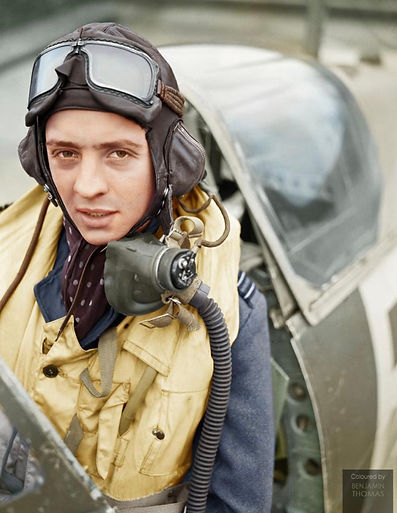
Service Details
-
Rank: Wing Commander
-
Service Number: (RAFVR, not publicly recorded)
-
Units: No. 92 (East India) Squadron RAF
-
Aircraft: Supermarine Spitfire
-
Theatres: Battle of Britain, Western Europe, Channel Front
Wing Commander Richard “Dickie” Milne was one of the most talented and courageous Spitfire pilots to serve with No. 92 (East India) Squadron RAF during the Second World War. Known for his exceptional flying skill, leadership, and dry sense of humour, Milne became a respected and admired figure within Fighter Command, earning the Distinguished Flying Cross (DFC) and Bar for repeated gallantry in action.
Born in 1918, Milne joined the Royal Air Force Volunteer Reserve (RAFVR) shortly before the outbreak of war. After completing his pilot training in 1940, he was posted to No. 92 Squadron, then one of the RAF’s premier fighter units, equipped with the Supermarine Spitfire. Based initially at Biggin Hill and later at Manston, the squadron was heavily engaged in the Battle of Britain and subsequent offensive operations over occupied Europe.
Milne quickly established himself as a cool and determined combat pilot. His early victories and confident flying style earned him the admiration of his squadron mates, among them well-known figures such as Brian Kingcome, Geoffrey Wellum, and Donald Kingaby. He was awarded the Distinguished Flying Cross (DFC) for “displaying outstanding courage, determination and devotion to duty in numerous engagements with the enemy.”
Promoted and later given command responsibilities, Milne led flights and squadrons with energy and precision during Fighter Command’s growing offensive into France in 1941–42. He received a Bar to his DFC for his continued gallantry and leadership during these operations, particularly for escort and fighter sweep missions deep into enemy territory where he demonstrated tactical skill and composure under intense pressure.
Following the war, Milne continued to serve in the Royal Air Force, rising to the rank of Wing Commander. His post-war career included a mix of flying and staff roles, contributing to the RAF’s adaptation during the early jet era. Known for his professionalism, charm, and sense of duty, Milne remained a steadfast supporter of his wartime comrades and of 92 Squadron Association, which he helped nurture in later years.
Wing Commander Richard “Dickie” Milne, DFC & Bar, passed away in 1986, remembered as one of 92 Squadron’s finest pilots and leaders — a modest yet exceptional airman whose courage and character embodied the spirit of the Royal Air Force in its finest hour.

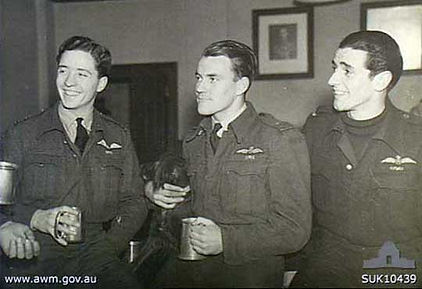


Squadron Leader Anthony Charles “Tony” Bartley was one of the Royal Air Force’s outstanding fighter aces of the Second World War and one of the most engaging personalities to emerge from the Battle of Britain. Decorated with the Distinguished Flying Cross (DFC) and Bar for repeated gallantry, Bartley was celebrated both for his exceptional flying skill and his later contributions to film and television.
Born in Dublin, Ireland, on 28 March 1919, Anthony Bartley was educated at Stowe School and joined the Royal Air Force in 1939 on a short service commission. After pilot training, he was posted to No. 92 (East India) Squadron RAF, which had recently been equipped with the Supermarine Spitfire and was based at Croydon before moving to Biggin Hill — one of Fighter Command’s key Battle of Britain airfields.
During the Battle of Britain in the summer and autumn of 1940, Bartley flew intensively against the Luftwaffe, engaging enemy fighters and bombers over southern England.

On 15 September 1940 — now commemorated as Battle of Britain Day — he destroyed several enemy aircraft in fierce engagements. His skill, aggression, and composure under fire earned him the Distinguished Flying Cross (DFC) for “gallantry and devotion to duty of the highest order.”
He remained with 92 Squadron into 1941, taking part in offensive sweeps over occupied France and escort missions for Bomber Command. For his continued courage and success in combat, Bartley received a Bar to his DFC, recognising his leadership and repeated acts of bravery. His total wartime tally was at least 12 confirmed victories, along with numerous probable and damaged enemy aircraft.
Bartley was later promoted to Squadron Leader, commanding No. 65 Squadron and later No. 111 Squadron, continuing to fly Spitfires and later Mustangs. His combat experience and quick decision-making made him one of the RAF’s most respected operational leaders.
After leaving the RAF in 1946, Bartley moved to Hollywood, where he served as a technical adviser on aviation films, working with notable figures such as Sir Alexander Korda and Frank Launder. He married Deborah Kerr, the celebrated British actress, in 1945 — the two having met during the war while Bartley was advising on film projects for the RAF. The couple later settled in the United States, where Bartley pursued a successful career in film and television production.
Squadron Leader Anthony Charles Bartley passed away in 2001, aged 82. Remembered as both a decorated fighter ace and a warm, charismatic man, he embodied the blend of courage, charm, and professionalism that defined the pilots of the Royal Air Force during its finest hour.

Service Details
-
Service Number: 40727
-
Rank: Squadron Leader
-
Units: No. 92 (East India) Squadron RAF; No. 65 Squadron; No. 111 Squadron
-
Aircraft: Supermarine Spitfire, North American Mustang
-
Theatres: Battle of Britain, Western Europe