
Cobras old, but not forgotten
In alphabetical order, please scroll down
92 Squadron has an extraordinary array of individuals, many of whom are world famous and others who are not well known to the outside world. Simon has researched and published short biographies on some of those Cobras and we are delighted to re-publish them here. To us they are not only heroes but they are everything that epitomises what being a Cobra is all about.

ARCHER, Flt Lt Phillip Leslie Irving DFC Award effective 24 August 1942 as per London Gazette dated 11 September 1942 and AFRO 1535/42 dated 25 September 1942. This officer has completed sorties over enemy territory and has destroyed at least four enemy aircraft. On one occasion, although wounded in the leg, Flight Lieutenant Archer flew his badly damaged aircraft back to the base where he executed a skilful landing. He is a most efficient leader. Born in Bridgetown, Barbados, 1917. Son of Frederick Leslie and Millicent Beryl Archer, - of Hastings St. Michael, Barbados. R Sc. Joined RCAF in Montreal, 6 June 1940. Trained at No.1 ITS No.6 EFTS, and No.1 SFTS. Posted overseas immediately; to No.57 OTU, 17 February 1941; then to No.92 Squadron, 5 May 1941 where he destroyed three enemy aircraft, damaged one & was Wounded In Action No.412 Squadron, 11 November 1941; to No.416 Squadron ("A" Flight Commander), 10 March '42 To Station Kenley, 1 December 1942. Presented with award 9 February 1943. Designated CO, No.402 Squadron, 13 June 1943 and attached to No.421 Squadron for a few days (to get back to operational standards) On 17 June 1943 he took command of No.421 Squadron Killed in Action 17 June 1943, Aged 26. Buried at : LONGUENESSE (ST OMER) SOUVENIR CEMETERY Plot 8. Row A. Grave 1 - Pas de Calais,France Air Casualties Ottawa, July 25, 1943 - (CP) - The R.C.A.F. in its 636th casualty list of the war containing 38 names yesterday reported two men killed on active service overseas, one dead from injuries suffered on active service overseas, 12 missing on active service after overseas air operations and four killed on active service in Canada. Including with next of kin: ARCHER. Philip Leslie Irving - D.F.C. Sqn Ldr, missing after air operations overseas. Mrs. F.L. Archer (mother), Belleville, St. Michael, Barbados. Air Force Casualties Ottawa, November 16, 1943 - (CP) - The R.C.A.F. reported tonight in its 734th casualty list of the war, containing 50 names, that nine men have been killed on active service overseas, while 16 others are missing on active service after air operations. In Canada, three men were listed as killed on active service and three others as previously reported missing on active service and now for official purposes presumed dead. Including, with next of kin: ARCHER, Philip Leslie Irving – DFC, Sqn Ldr, previously reported missing on active service overseas, now for official purposes presumed dead. Mrs. F.L. Archer (mother), Clovelly, Barbados, B.W.I. "They Shall Not Grow Old" has him being from Hasting St. Michael. Barbados. Killed In Action June17, 1943 age 27. It also states he was with 402 City of Winnipeg Squadron flying Spitfire aircraft # KZ 996 and was lost during a cross-channel sweep. This being his last sortie before becoming CO of 421 squadron. Another souce reports him being KIA on his first sortie as CO of 421 squadron, same date. He is buried in the St. Omer Cemetery, Longuenesse, France. Aerial victories: 23 June 1941, one Bf.109F destroyed southeast of Boulogne 7 July 1941, one Bf.109F destroyed and one Bf.109F damaged near Lille; 9 July 1941, one Bf.109F destroyed near Bethune; 18 July 1942, one Do.217 destroyed east of Orfordness 17 June 1943, one FW.190 destroyed (then KIA)

BARRACLOUGH, Sgt. Stanley, Michael Stanley Michael Barraclough was born on 2nd April 1917, the only child of Douglas and Dorothea, at Livingstone in Northern Rhodesia where his father was the Senior Civil Servant for the district. At the age of three he and his mother returned to England in preparation for his education. They lived with his maternal grandparents at the vicarage in Shoreham, Sussex, where his grandfather was the vicar. Michael and his mother were soon to move with his grandparents the short distance along the coast to Chichester. After his primary education he entered the local Public School in 1925. Sporting success came naturally to him, he was selected for the First teams at cricket, rugby and hockey, but to achieve academically he had to work hard to be in the top half of his class come the end of term. During this time news was received from Rhodesia that his father had been reported as missing in the Bush, no rational explanation for his disappearance has ever come to light. In 1929 Michael and a like-minded friend moved to the Training Ship “Mercury” at Hamble near Southampton which catered for pupils who intended to join the Navy. It was very strict on discipline and trainees were still flogged over a cannon as they had been in Nelson’s era. Michael had decided on a career in the Royal Navy, rather than take the “easy route”, a job in the Architects office of his new Stepfather. In 1931 he witnessed a momentous milestone in aviation history, the winning of the Schneider Trophy by the RAF. The grace and the speed of the Spitfire’s forerunner thrilled him and at this moment he decided that he wanted to fly. In early 1932 he successfully sat the entrance exam for the RAF. and was accepted as an apprentice Metal Rigger. He learnt his trade at RAF. Halton in Buckinghamshire far from the family home at Marple Bridge in Cheshire. Having completed his training he was posted firstly to Cranwell and then to Iraq, where he also trained to be an Observer as well as performing his Rigger’s duties. During 1937-1938 he was privileged to fly as Observer to his Commanding Officer, the same man who had inspired him to join the RAF, the pilot of that Schneider Trophy winning seaplane! His desire to be a pilot as strong as ever, his request for pilot training was approved. On arrival back in England during the spring of 1939, he did his initial training at Filton, Avon, moving to Brize Norton in Oxfordshire for his flying training. The outbreak of war shortened all training programmes, Michael completing his in late February 1940 and being posted to 92 Squadron. During his time as a Sergeant pilot with 92 at Pembrey he flew more than 60 operational sorties and scored more than one victory however for undisclosed personal reasons he never made any claims. Michael Barraclough left Pembrey with 92 when the squadron was transferred to Biggin Hill but was instead posted to 7 OTU at Hawarden, where he taught other experienced pilots how to fly Spitfires. After a short period he moved to the Central Flying School on Salisbury Plain Wiltshire, where he spent seven weeks becoming a Flying Instructor. He was then posted to 15 FTS at Kidlington Oxfordshire, here he taught young airmen to fly, they were destined to replace those lost during the Battle. He was commissioned as a Pilot Officer on 28th June 1941, and later moved to the Flying Instructors School in Scotland where he remained until he returned to operational flying in 1944. He flew Mosquito night-fighters fitted with airborne radar for use in the Intruder role to counter the enemy night-fighters which were attacking RAF bombing missions. Michael remained in the RAF post-war at the Empire Central Flying School at Little Rissington, Gloucestershire. Here he evaluated many types of aircraft and began flying jet-powered aircraft. In May 1946 he re-formed 504 Sqn at Syerston, Nottinghamshire shortly afterwards the squadron moved to Hucknall. At this point he was promoted to Squadron Leader, and posted for Staff duties at Reserve Command HQ. 1949-51 saw him at the Air Ministry in London, where he was responsible for foreign Air Attaches. He then went on No.9 course at the RAF Staff College at Andover, Hampshire. “Desk-flying” ceased in 1952 when he became Deputy Chief Instructor at 231 OCU. This entailed the training of Canberra bomber crews belonging to overseas air forces, bringing them up to operational standard. This was followed by three years of staff duties in Cyprus, where he co-ordinated the withdrawal of units from the Middle East. He retired from the RAF on 28th May 1958 after 25 years service. His first three years of civilian life were spent working in the whisky export business, the remainder of his working life was spent as an Administration Manager for a construction company. Michael never married, and spent his retirement solving crosswords, playing Bridge and enjoying the social life of the retirement village where he lived in East Anglia. Michael spent a major part of his RAF career teaching pilots and instructors, passing on the skills he had learnt on the steep learning curve of early 1940 and those learnt as one of “The Few” in the early days of the Battle. He died on 25th April 2006.

BARTLEY, Sqn Ldr Tony, DFC and Bar Anthony Charles Bartley was born in Dacca, India, the son of Sir Charles Bartley, an Irish barrister who served as a judge in the Calcutta High Court. He was educated at Stowe and joined the RAF in 1939 on a short service commission. He was posted to No. 92 (East India) Squadron in November 1939, as it was forming in Tangmere, Sussex with the fighter version of the twin engine Bristol Blenheim. After the Blenheims were replaced by Spitfires, he fought over Dunkirk during the fall of France and evacuation of the British Expeditionary Force. As an RAF Spitfire fighter ace, he was awarded the DFC after scoring eight victories against enemy aircraft in the Battle of Britain during the summer and autumn of 1940. The following summer Bartley was attached to Vickers-Supermarine as a production test pilot and made a significant contribution to the development of the Spitfire. Tony Bartley In March 1941 he was posted as a flight commander to No. 74 Squadron RAF at Manston in Kent. He later served as a flying instructor at No. 53 Operational Training Unit and No. 56 Operational Training Unit (OTUs), before moving over to Vickers-Supermarine. During this time he performed the acrobatics for the film "The First of the Few", which chronicled the life of the Spitfire's designer R J Mitchell, as played by Leslie Howard. In August 1942, Bartley received command of No. 111 Squadron RAF and led it to North Africa during the November Operation Torch landings. He shot down several enemy fighters over Tunisia, including at least three Me 109s. Following his demobilisation, he returned to Vickers-Armstrong as test pilot and sales executive. However his career took a new direction when he moved to Hollywood following his first marriage in 1945 to the actress Deborah Kerr. After studying film production with MGM, he formed European-American Productions, and wrote and produced television films for Fireside Theatre, MCA and Douglas Fairbanks Presents. He later joined CBS Films where he was responsible for European sales and production. He then joined Associated-Rediffusion, serving as head of the international division and assistant general manager until 1965, when he moved to Canada to represent Global Television and he wrote a history of Canada for the Canada Broadcasting Company. In the late 1960s Bartley was appointed a director of the Caribbean Broadcasting Corporation in Barbados and in 1971 he moved to Ireland, where he formed Intercontinental Telefilms and continued to write and develop television programmes. His first marriage to Deborah Kerr was dissolved in 1958 with he whom he had two daughters Francesca and Melanie. Their three grandsons include the actors Lex, Tom and the writer Joe Shrapnel. He married secondly in 1965 to Victoria Mann who survived him with their two daughters Lucinda and Teressa, proving the old belief that Fighter Pilots, by and large, have daughters.

BRETTELL, Flt Lt Gordon DFC Gordon Brettell was born in Chertsey Surrey, the son of Eileen and stockbroker Vivian Brettell and after attending Cheltenham College gained a bachelor of arts degree from Clare College, Cambridge University[1] and then lived in the family home at St Ann’s Hill[2] before embarking on a career in his Austin 7 as a motor racing driver.[3][4][5] War service He enlisted in the Royal Air Force at the start of 1940 as an aircraftman pilot candidate with the service number 61053.[6] On completion of flight training he was commissioned as pilot officer on 17 February 1941.[7] From final stage training at No. 58 Operational Training Unit[8] Brettell Joined No. 92 Squadron RAF flying the Spitfire on 3 March 1941[9] and on 4 September 1941 probably shot down a Messerschmitt Bf 109 in combat.[10] Spitfire fighter He was promoted to flying officer on 17 February 1942[11] and in the summer of 1942 he was posted to No. 133 (Eagle) Squadron RAF at Lympne as a flight commander, the only British officer within the volunteer US unit.[12] He was temporarily in command of the squadron.[13] During his service with 133 Squadron, led by Don Blakeslee, he flew over the Dieppe beaches as top cover while the amphibious commando raid took place on 19 August 1942 and shot down a Focke-Wulf Fw 190 fighter during the mission.[12][14][15] On 29 September 1942 he was awarded the Distinguished Flying Cross for his service with 133 (Eagle) Squadron, his citation stating, This officer has participated in 111 sorties over enemy occupied territory. He has always displayed the greatest keenness to engage the enemy. On one occasion he was wounded in combat and, on recovery, he resumed operational flying with renewed zest. He is an excellent flight commander.[16][17] Prisoner of war Leading 133 Squadron on a bomber escort mission he took off in a Supermarine Spitfire Mark IX fighter (serial number BS313) on 26 September 1942[18] to escort a group of B-17 bombers to Morlaix. The entire formation was blown far off course by adverse winds and only one of the twelve aircraft of 133 Squadron made it back to England after attacks by fighters, anti-aircraft fire and fuel shortage. Brettell was captured and badly injured, becoming a prisoner of war.[19][20] He was sent to Stalag Luft III in the province of Lower Silesia near the town of Sagan (now Żagań in Poland). Here he became an enthusiastic member of the escape committee specializing in forged documents and hand producing rubber stamps from linoleum and rubber boot heels to authenticate the documents and fashioning embossing tools from toothbrushes.[3] He was promoted to flight lieutenant in captivity on 17 February 1943[21] and by 1943 had participated in at least one previous escape attempt.[22] He spent time "outside the wire" after breaking out from Stalag Luft III with Kingsley Brown on 27 March 1943. They travelled some distance on the railways and at one stage shared a compartment with a number of German soldiers.[23] 'Great Escape' Working with "Tim" Walenn the camp’s head of forgery and Henri Picard they produced forged passports, movement orders, railway documentation and all manner of identity papers to move about Germany.[24] Brettell was one of the 76 men who escaped the prison camp on the night of 24–25 March 1944, in the escape now famous as "the Great Escape". Travelling in a group of four escapees with Tim Walenn, Romualdas Marcinkus and Henri Picard, all posing as Lithuanian workers they managed to reach a train heading towards Danzig (now Gdańsk, Poland). Most likely, they intended to travel to East Prussia and cross the Lithuanian border hoping to cross the Baltic Sea to neutral Sweden. When the Germans discovered the escape they began manhunts. Brettell and his group travelled further than most of the escapees but were captured by the Gestapo near Schneidemühl on 26 March. The party of four were brought to Stalag XX-B and spent the night there. On the following day they were handed over to the Danzig Gestapo.[25] Its officials took the men to a forest near Gross Trampken (Trąbki Wielkie) and executed them.[26] On 29 March, his body was cremated in Danzig's crematorium.[27] He was one of the 50 escapers executed and murdered by the Gestapo.[28][29] His ashes, originally buried at Sagan, are now buried in part of the Poznan Old Garrison Cemetery.[1] Brettell’s headstone has the inscription chosen by his parents: "Those who are nearer to God, Are not farther from us".[30] Brettell's name was amongst those in the list of the murdered prisoners which was published when news broke on or about 20 May 1944.[31] Memorial to "The Fifty" down the road toward Żagań (Brettell is near top left) Awards Brettell was awarded the Distinguished Flying Cross on 29 September 1942 for his service with 133 (Eagle) Squadron RAF.[32] He was posthumously mentioned in despatches in June 1944, recognizing his conspicuous bravery as a prisoner because none of the other relevant decorations then available could be awarded posthumously

BRICKHILL, Plt Off Paul Brickhill was unimpressed by war fever, until the shock of the invasion of France and subsequent withdrawal from Dunkirk, coupled with boredom with his deskbound sub-editor job, induced him to enlist on 6 January 1941 with the Royal Australian Air Force (RAAF).[8] His flight training commenced in March 1941 at the Number 8 Elementary Flying Training School at Narrandera, New South Wales as undertaken in Australia Under the Empire Air Training Scheme. Brickhill undertook advanced training as a fighter pilot in Canada and the United Kingdom before being assigned to No. 92 Squadron RAF, a unit equipped with Spitfires and part of the Desert Air Force in North Africa. On 17 March 1943, he was shot down over Tunisia and became a prisoner of war.[9] He was flown to Italy on 23 March, then sent by train to Germany. After being held at the Dulag Luft at Oberursel, a central receiving and interrogation station for captured enemy airmen for the Luftwaffe, he was sent to Stalag Luft III, in Lower Silesia, 150 km southeast of Berlin, arriving there on 4 April 1943.[10] Brickhill became involved with organizing the camp's escape, initially as a lookout or "stooge", before volunteering to work as a digger on the "Tom" tunnel.[11] He developed claustrophobia, so he was put in charge of security for the forgers. Because of his claustrophobia and the risk that he would panic and block the escape of those behind him, he was not allowed to take part in the escape attempt, which is known as "The Great Escape".[12] Following the announcement of the murder of the escapees who had been recaptured following the Great Escape, Brickhill became determined to document the event. Discussing the subject with fellow prisoner Conrad Norton, they found that many of their fellow prisoners had other tales of daring escapes that would justify a book following the end of the war. As Brickhill had been involved in "The Great Escape", he concentrated on that story, while Norton collected individual tales.[13] Since the prisoners were forbidden from writing anything other than letters and postcards, they collected every piece of paper they could find and, writing in as small a hand as possible, they collected stories and hid them from the guards. After the war, Brickhill wrote the first major account of the escape in The Great Escape (1950), bringing the incident to a wide public attention. He went on to write two other best-selling war books: The Dam Busters, the story of Operation Chastise and the destruction of dams in the Ruhr valley by No. 617 Squadron RAF, and Reach for the Sky, the story of Battle of Britain ace Douglas Bader. Brickhill's major books were translated into more than 20 languages and several, including "The Great Escape," were made into films. After the war, he worked for The Sun in Europe, where he covered the Nuremberg trials, and in New York. Brickhill died in 1991, aged 74.

BOWEN-MORRIS, W/O Hugh Hugh Bowen-Morris was born in Dorset and brought up in Bath then Coventry. He joined the RAF in 1939 and arrived on 92 squadron at the height of the Battle of Britain in September 1940. His first encounter with the enemy came on the 27th when, flying as Red 3 he destroyed a JU 88 with Red 2, Tony Bartley. They saw it crash into a field near Sheerness in Kent. Hugh’s next kill was in May 1941 when he shot down a Bf 109 and another on 16th June when he destroyed an attacking Bf 109. On 23rd June the squadron were tasked to protect a convoy in the English Channel. The convoy was attacked by enemy bombers, whilst Hugh and the others were trying to stop the bombers sinking the convoy they were attacked by the bomber’s fighter escort. During the melee a 20mm cannon shell penetrated Hugh’s cockpit and exploded, initial pain in his right arm turned to numbness. With his right arm refusing to move, landing was not going to be easy, however he survived a wheels up landing with no further damage. As he attempted to climb out of his cockpit he noticed that his arm was only attached to him by a small piece of flesh. he managed to climb out, losing consciousness as he did so. Hugh woke up to find himself in the Luftwaffe Hospital in St. Omer his shattered right arm having been amputated. Three months had elapsed and all Hugh’s family had been told was that he was “missing”. Then a letter addressed in unfamiliar handwriting arrived. Hugh had persuaded a friendly nurse to write a letter for him. The family breathed a huge sigh of relief that he was alive. The first exchange of prisoners organised by the Red Cross in October 1943 saw Hugh repatriated through Sweden. He was finally discharged on 9th June 1944 retaining the rank of Warrant officer. Hugh returned to his pre war job as an accountant gaining more experience and passing more exams until he rose to the position of Financial Director. Through his work he met Pauline in London during the spring of 1948 and they married on 10th November 1950. His job took him to New York for a spell before he joined the board of directors of John Brown Shipbuilders for twelve years. Hugh retired to Gloucestershire but the onset of heart disease eventually required by-pass surgery, which was successful, however his heart problems continued and were the cause of Hugh’s death on 9th February 1991. This biography has been compiled from Michael Robinson’e excellent book about 92 Squadron 1939-40. It goes into much greater detail about the lives of every pilot who served on 92 squadron during that period. ‘Best of the Few’ with a foreword by Vera Lynn was published in 2001.


BOY, Vincent Vivian Captain SAAF Lieutenant Vincent Vivian Boy (205827 V) was in The South African Air Force. He was promoted to Captain 13/3/44. Served with 92 Squadron Italy After the war became a prominent dentist in Johannesburg and was a respected member of the City Council.
BROWN Charles F, W/O NO. 92 (EAST INDIA SQUADRON RAF MIDDLE EAST) The following is reproduced from squadron routine orders serial number 16 dated 30th of April 1943: ACTS OF GALLANTRY The following is reproduced from EROs and concerns members of this Squadron. “On the 21st of February, 1943 a Wellington aircraft caught fire on an airfield in Tripolitania, the crew being trapped inside. 365145 F/Sgt. Brown and 969070 corporal Finnie with complete disregard for their own personal safety enter the aircraft on two occasions, rescued two members of the crew and made further splendid efforts to rescue another member of the crew.”

BRYSON, Plt Off John Samuel Pilot Officer John Samuel Bryson, called "Butch", was the son John T. Bryson and Marion Elphinstone Bryson. He born in Westmount, an enclave of Montreal, Quebec, Canada. Prior to the war he was a member of the Royal Canadian Mounted Police but bought his way out in order to serve in defense of Britain. In January 1939 he joined the Royal Air Force on a short service commission. Upon completion of his flying training at No. 13 Flying Training school at RAF Drem, he was posted to No. 92 Squadron RAF. He joined the squadron at RAF Tangmere on 10 October 1939. Bryson claimed a Bf109 on 23rd May and he had one 'kill', an He111 over Dunkirk on 2 June 1940, and shared a kill on 24 July 1940 of a Junkers Ju88 which was bombing shipping in the Bristol Channel. It crashed on Martinhoe Common, near Lynton. Flying with 92 Sqn out of Biggin Hill, joining two other squadrons in a Big Wing group, on 24 September 1940, in response to a ten Ju88 medium bomber attack, defended by over one-hundred 109s, Bryson was "last seen making a solo attack on a large formation ofMe109s". He was shot down and killed by Hauptmann Herbert Ihlefeld's Bf109s of I. (J)/Lehrgeschwader 2, his Spitfire, X4037, crashing and burning out near North Weald. Butch Bryson was 27 years old. He was buried in St Andrew's Church, North Weald Bassett, Essex, Row 1, Grave 4.
Mick is in this picture somewhere, if anyone knows where let us know

BRUCKSHAW, Flt Lt Mick Mick Bruckshaw Mick Bruckshaw was born on 9th May 1917 and was educated at Bolton School. He went on to study pharmacy at Manchester University and volunteered for the RAF, joining in October 1940. His first solo flight was May 14th 1941 and got his wings on 13th September 1941. He started with 57 Operational Training Unit then 602 squadron flying Spitfires. In January 1942 he was transferred to 274 squadron in North Africa, flying Hurricanes. His first operational scramble was on February 28th and in April, whilst engine testing, got “jumped” by a 109F, receiving bullet splinters in his arm and face. (“Sgt Eagle dealt with the 109!”) By June, the squadron was constantly involved in bombing missions after the German Panzer breakthrough had occurred and by October, the Battle of El Alemain, the turning point of the Middle Eastern campaign and possibly the whole war. By December 1942 Mick had flown 123 sorties. 92 squadron was at the forefront of fighter action in North Africa and there was intense combat. On the 17th March, Mick was involved on a sortie along with Flight Commander Neville Duke and F/O Paul Brickhill, where twelve aircraft encountered 12 Me 109’s fighter bombers, with a cover of six Me 109’s and three Macchi 202’s. A Macchi 202 scored hits on Paul Brickhill’s mainplane, which exploded his ammunition and he was forced to bail out over enemy occupied Tunisia. Paul Brickhill ended up in Stalag Luft III where he was involved with a mass escape. After the war he wrote “The Great Escape, Reach for the Sky and the Dam Busters.” This particular incident unknowingly provided the platform that gave a dynamic boost to the British Film Industry in the early 1960’s. The Hurricanes squadrons were starting to be held back for a more defensive role about this time, being outclassed as fighters by the 109’s. Tripoli was occupied on 23rd January 1943 and Mick was transferred to 92 squadron, along with Pilot Officer Paul Brickhill. With the tide of war turning, March and April saw fierce combat where the squadron was involved in outstanding action with SAAF Kittyhawks culminating with the announcement on 19th April, 96 enemy planes had been destroyed in the past 24 hours. After completing 175 operational sorties, Mick was posted No 73 Operational Training Unit along with Neville Duke1 who became CO. (Duke went onto become the highest scoring fighter pilot [27]in the Mediterranean theatre and then became a household name as a test pilot in the pioneering days of jet engines. This included breaking the world record speed in a Hawker Hunter in 1953.) The operational training was for photographic reconnaissance, which Mick completed to an above average standard. This was quickly followed by a posting to 680 Photo Reconnaissance Unit. Mick loved flying, particularly Spitfires and marvelled at the speed of the unarmed, light weight reconnaissance plane where you flew alone. He recalled how a Focke Wulf 190 exploded trying to catch him. When the 190’s were first encountered in Africa in March 1943 they would easily pull away from the Mark V Spitfires. He progressed to flying twin engine planes, Blenheims, Baltimores and Mosquitos based in Nicosia and photographing the campaign in the Mediterranean. His first Sortie, on 1st March 1944 was a photo reconnaissance over Rhodes, Cos, Leros and Samos in a Mark XI Spitfire lasting 4 hours. In early April 1944 whilst on takeoff in a Mosquito, an engine failed, resulting in the plane spinning and crashing with circle of flames which Mick had to run through, severely burning his arm. He was in hospital in Heliopolis, Cairo for several weeks, where by coincidence, his medication was almost given to another Bruckshaw, his cousin Morton, also in the RAF, who happened to be in there as well. The near mistake briefly united the two in the strangest of circumstances and Morton commented on being shocked when he saw how badly Mick was injured with burns to his face and arms. The injury effectively finished Mick’s combat action in the war, but during rehabilitation he met his future wife Dorothy, a WREN in Southampton. Mick was back flying by May the following year and was demobilised in November 1945 and got married in the same month. He was also particularly keen on cars and was very handy when it came to repairing them. This proved to be very useful in the desert campaign, which ran backwards and forwards across North us with a very pictorial outlook of his war years. Africa leaving abandoned equipment. A German staff car was found and started to provide luxury transport for the “beer runs.”This practice became even more sophisticated with use of a captured Heinkel III for trips to Cairo! He also was fortunate to have a camera during his campaign and has left After the war, Mick worked as a pharmacist sales representative in Northern Ireland and then ran his own chemist shop in Birmingham, with Dorothy. There were two sons Ian and James. Mick was forced to retire in 1964, when a mystery illness struck and he developed a limp in his left leg and the paralysis spread to his lower body and confined him to a wheelchair. He was grateful for the support from the RAF with a long period in Headley Court trying to combat the illness. The later prognosis was Multiple Sclerosis and Mick died in December 1970 after a long battle which he quietly persevered with and fought, with Dorothy’s support and nursing. Mick remembered his days in the RAF and in particular 92 squadron with exhilaration, happiness along with sadness. His photographs showed a lot of smiling faces, hunting exploits for fresh meat, bartering in the markets for eggs and wine but some would not be around by the end of the war, sometimes the next day. When a plane flew over, he would always look up and tell you the type of plane it was. He would look at the clouds and forecast the weather always with a smile on his face, but beyond all he was a modest man with a wonderful sense of humour, which will always be remembered. 1 Mick’s brother in law, Geoffrey Brown wrote to Neville Duke in 1992 and again is 2002 where he was extremely helpful in identifying and explaining the background to a lot of Mick’s war time photos. Geoffrey produced an extensive album of Mick’s wartime years, with a collection of stories about the squadrons he was involved with.


CANNAM, Flt Lt Peter "My father never really spoke about his war although my mother knew he had been awarded the medal," said Mr Cannam, of Nailsworth, Gloucestershire. "About four years ago I decided to do something about it. I wrote to my MP and tried all the normal channels but I wasn't getting anywhere. "Then, at Christmas I was playing around on the Internet. I e-mailed the White House and the Pentagon and about a month ago the Pentagon e-mailed me back. They sent me the medal with a big certificate and a letter. The medal looks like it has been kept in storage since the end of the war." Mr Cannam had to send a copy of the letter confirming the award and his father's logbook. The proud son, whose mother, Thelma, aged 72, lives in Gloucester, said: "I'm extremely pleased that it has paid off and we have the medal at last. My mother is also delighted. It is something that I will be able to hand down to my daughter."
CAZENOVE, Fl Off Peter Frederick Seventy-one years ago, an RAF Spitfire, piloted by a raffish recently-bankrupted Old Etonian on his first combat mission, crash-landed on a beach near Calais. Fuming but unscathed, Flying Officer Peter Cazenove made a rapid exit from the scene, while his plane began a more leisurely disappearance into the wet sand. By the end of the war, there was little to see of it but a few inches of tail fin and a propeller tip. Not that long ago, Supermarine Spitfire P9374 was back in the air – restored to factory condition in one of the most intricate aircraft rescue projects ever attempted. As it wheeled and banked in the sunshine over Cambridgeshire, the thrill of watching a classic plane reborn was laced with a sense of poignancy that the accident-prone Cazenove, who died in 1981, was haunted to the end of his days by the fate of his aircraft. Born into the illustrious City stockbroking dynasty, best known for managing the Royal family’s money, young Cazenove cut exactly the kind of dashing figure that movie portrayals of wartime fighter pilots have tried to capture. Tall and powerfully built, he had been a star rugby player at Eton, and his good looks had secured him a steady supply of society belles. After leaving school, he had joined his father in a new stockbroking venture and later joined the Royal Air Force Volunteer Reserve as a “weekend flier”. There have to be some doubts about his abilities as a financier. The father-son venture went bust, obliging Cazenove to declare bankruptcy and, as a matter of honour, resign from the Reserve. But, with the outbreak of war in 1939, came a second chance to get back into the air. He was 32 – ancient by the standards of the RAF pilots of the time – but panting for action, and he quickly landed a posting with 92 Squadron, based at RAF Northolt. The planes were Mark I Spitfires – the first production run of the Second World War’s most celebrated aircraft. Later models were far more sophisticated, better armed and nearly twice as heavy, but to aviation purists the Mark I is the true Spitfire. Cazenove reportedly had difficulty squeezing his big frame into the cockpit, but when, on May 23, 1940, orders came through for a combat operation, he was raring to go. The squadron flew first to RAF Hornchurch, Essex, where it was briefed to fly sorties aimed at intercepting German bombing raids against the British and French forces trapped by the German advance into Northern France. Cazenove took off in P9374 at 8.05am. According to military historian Andy Saunders, author of a forthcoming book about the pilot and his plane, it is most likely that the Spitfire was shot up by the tail-gunner of a Dornier bomber. “It didn’t take a lot to bring a Spitfire down,” he says. “One bullet in the right place could have done it. Most likely, the engine was damaged and he lost power.” High above the coast, Cazenove considered his limited options. He could try to glide back to Britain, with the risk of going down in the Channel, look for a friendly ship to ditch near to and hope to be rescued, or make a crash landing in British-held territory. At about 9am, he bellyflopped on to the beach. His career as a fighter ace had lasted just 55 minutes. There, the Spitfire’s story seemed to have ended. The shifting sands devour almost anything left in them, and, while the advancing German troops were happy to be pictured sitting on the wreck, their commanders showed no interest in recovering it. It was 40 years later that P9374 made an unexpected re-appearance. Unusually strong tides pushed the plane back above the surface. It was barnacled and corroded, but otherwise mostly intact. “One day,” says Saunders, “I got a phone call from the manager of the hovercraft port at Calais. He was an aircraft enthusiast, and he said, ‘You’re not going to believe this, but there’s a complete Spitfire lying in the sand outside my office.’ He was right: I didn’t believe it.” Saunders raced to the scene, but the word was already out. “A local newspaper had done a story, and the souvenir hunters had got there before me,” he says. “The thing was being torn apart. People were taking away anything they could.” To get at the plane’s Browning .303 machine guns, the starboard wing had been smashed open and three of the four guns removed. What happened next was even more destructive. A local salvage team decided to drag the plane ashore using cables and a bulldozer. Already fragile, and filled with wet sand, the airframe simply came apart. It now looked less like a Spitfire than a heap of mangled scrap. The sorry remnants were given a token clean up and transported to the Musée de l’Air in Paris. They might still be there had the excited chatter of British enthusiasts not reached the ears of billionaire American gold-trader, Tom Kaplan. The 48-year-old New York-based investor, who has ridden the current gold price boom more profitably than perhaps anyone else, is both a vintage aircraft buff and an Oxford-educated Anglophile. He and a partner, Simon Marsch, persuaded the museum to sell them the plane and in 2006 set in motion the long process of restoring it to complete airworthiness. The work has been done by the Aircraft Restoration Company, based at Duxford Airfield, Cambridgeshire. “It’s been an incredible project,” says chief engineer Martin “Mo” Overall, 36. “Everything that could possibly be used from the original plane has been used, and everything else has come from other Spitfires or been made to the exact original designs. “This was the 557th Spitfire made out of about 22,000, so it’s very early stuff. They were upgrading and refining them throughout the run. This is about as close as you can get to how the original plane was. The important thing was to get absolute authenticity. We had the drawings for the Dunlop tyres, but Dunlop no longer had the moulds. So they built new moulds and made the tyres for us, exactly as they were on this Spitfire. The engine work was done in Gloucestershire, the fuselage restored on the Isle of Wight.” Asked what all this cost Mr Kaplan, people involved in the project tend to wince and say: “A lot.” Certainly, the total runs into millions. The original planes were bought by the Ministry of Defence at £9,500 each. On the airfield, P9374 is ready for take-off. A hefty belch of smoke erupts from its Rolls-Royce Merlin engine as it skips across the grass and, with beguiling lightness, takes to the sky. As John Romain, ARC’s boss and a seasoned Spitfire pilot, swoops low over the workshops where the plane was brought back to life, Saunders is visibly moved. “Seeing it back in the air is something you couldn’t have dreamed of 30 years ago,” he says. “It’s extraordinary.” As, in a way, was the subsequent life of Peter Cazenove. After the crash, he walked into Calais, where, still in his damp flying suit, he found a British regiment and joined it in an unsuccessful attempt to fight off the Germans. When the town fell, he was captured and sent to a succession of POW camps, including Stalag Luft III, the notorious camp for Allied airmen, where he helped organise what became known as the Great Escape. “Cazenove couldn’t escape himself because he was too big to get through the tunnel,” says Saunders. “The worry was that he’d get stuck and block all the others. But we know that he did make at least three other escape attempts.” After the war, he returned to England, married Edna, and – perhaps scarred by his previous experience in the family business – took up farming. Yet he failed to settle. Later, the Cazenoves moved to Kenya, setting up as ranchers, but their time there coincided with the violent Mau Mau rebellion against British rule, and they returned home, eventually settling on the South Coast. He had no children. “When I finally tracked him down,” says Saunders, “Edna answered the phone and told me he had died just a few days earlier. One of the last things he had said to her was that he would have loved to have known what had happened to his old Spitfire.” Peter Cazenove died on 7th december 1980. With its return to the skies over its homeland on August 30, 2011, P9374 is the earliest Mark of Spitfire flying anywhere in the world. If you would like to own it, the aircrafft is now available for purchase.


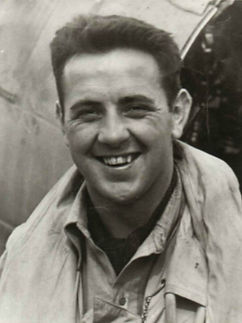

CRABB, Flt Lt Earl Frederick, DFC Crabb was born in Delhi, Ontario, Canada. He served in 92 Squadron under the command of fellow ace and future Air Marshal Arthur Coningham. Crabb flew a Royal Aircraft Factory SE.5a to score all six of his victories. They took place between 22 July and 29 October 1918. Crabb downed five German Fokker D.VII fighters and a DFW reconnaissance plane; the latter kill was shared with fellow ace Thomas Stanley Horry and another pilot. Crabb was awarded a Distinguished Flying Cross on 8 February 1919. After World War I, he was an aviation pioneer and bush pilot. . He barnstormed. He flew air mail from Boston and New York to Detroit during the 1920s. In the early 1930s, he was the first pilot hired by the U.S. Forest Service in Maine. Crabb returned to duty for World War II as a major, joining the U.S. Army Air Corps and serving in Training Command. After his discharge in 1945, he returned to his civilian flying job. He retired as Chief Pilot with the Forest Service at age 65, circa 1964. He continued to fly as a commercial pilot until about 1971.
DENNY, Flt Lt Geoff Geoff was a Lightning Pilot on 92 and flew out of Geilenkirchen and Gutersloh under Chris Bruce, he is somewhere in this picture, if you know where let us know
DIBDEN, Flt Lt Clifford John, Clifford John Dibden was born on 23/02/1917 in Chepstow, Monmouthshire and was the son of Charles and Edith Dibden. His father worked as a Baker’s vanmen and the family lived at 5 Howell Row, Chepstow. Cliff was a keen rugby player and during 1937/38 he played centre for both Gloucester and Lydney Rugby Clubs. On 06/03/1939 Cliff joined the Gloucestershire Constabulary as a Police Constable and was stationed at Lydney Police Station in The Forest of Dean. In 1941 he married local girl Pearl Frances Reeks and they lived together at Stroat Farm, Tiddenham near Chepstow, with their spaniel called ’Monty’. On 08/09/1941 Cliff joined the Royal Air Force Volunteer Reserve and became Flying Officer 136511. He joined 92 Squadron in 1943 in Italy. On 17/01/1944 92 Squadron were posted to Marcianise, near Naples in Italy, to provide top cover for the 8th Army. On 22/01/1944 twelve Spitfires took off from Marcianise to support British and American troops who landed 30 miles south of Rome. Cliff’s was the tenth Spitfire to take off but sadly his aircraft hit a tree, crashed to the ground and burst into flames, Clifford Dibden died from injuries and burns. Just a few weeks later 92 Squadron moved from that air strip due to the obvious dangers and concerns from other pilots. Dibden is buried at the Caserta War Cemetery in Italy, in grave V,E,19. The Form 540 entry reads: - “Dibden was a most popular pilot and will be sadly missed”
EYLES, Sgt Peter Raoul Peter Raoul Eyles, of Falmouth, was born in the fourth quarter of 1916 in Cardiff, the son of Ralph Sidney Eyles (1888-1959) and Grace Elizabeth Eyles (nee Downer 1888-1927). His mother was from Jersey, she became seriously ill and died, at her request she was buried at sea, 4 miles off Mevagissey. PR Eyles attended Truro Secondary School and after leaving he joined the RAF as an Aircraft Apprentice in September 1932. He passed out in August 1935. He later applied for pilot training and was selected. Eyles completed his training at 11 FTS Shawbury and he joined 92 Squadron at Tangmere on 23rd October 1939. Eyles of Basingstoke, joined the RAF as an Aircraft Apprentice in September 1932 and passed out in August 1935. He later applied for pilot training an was selected. Eyles completed his training at 11 FTS, Shawbury and he joined 92 Squadron at Tangmere on October 23 1939. Over Dunkirk on June 2 1940, Eyles damaged a He 111. He claimed a He 111 destroyed on September 11. He was shot down on the 20th by Major Molders of JG 51. His Spitfire, N3248 went into the Channel off Dungness and Eyles was reported 'Missing'. He was 24 and is remembered on the Runnymede Memorial Panel 14. Pilot Officer H P Hill in another Spitfire was lost in the same engagement.

Click on photo for more interesting information
GILLIES, Fg Off John A. On the evening of 23 May 1940, 92 Squadron had set off on an evening patrol over Dunkirk when they encountered a formation of Heinkel He-111s, heavily protected by Messerschmitt Me-109s and 110s. Squadron Leader Roger Bushell ordered an attack and plunged into the bomber force with Gillies and Paul Klipsch. All three were shot down – Klipsch was killed; Bushell and Gillies were captured. Bushell was later executed in March 1944 by the Gestapo on the orders of Hitler after being recaptured in the aftermath of the Great Escape from Stalag Luft III. John Gillies remained a POW until the end of the War. John Gillies was the eldest son of Sir Harold Gillies (1882–1960) a New Zealand-born, Cambridge-educated ENT surgeon widely considered to be the father of plastic surgery, which he pioneered during the First World War at the Cambridge Military Hospital, Aldershot and the Queen’s Hospital, Sidcup. His younger cousin Sir Archibald McIndoe (1900–1960), also New Zealand-born, and for many years Gillies’ junior partner, made his name during the Second World War treating burnt airman at the Queen Victoria Hospital, East Grinstead – home of the Guinea Pig Club.

GROOM, Pilot Officer Ralph Harrison, 127043 Ralph Harrison Groom was born on 7th May 1920 in Hackney, London, moving to Isleworth to spend his teenage years studying in Brentford at Gunnersbury Catholic School where he excelled as an athlete. On leaving school in 1937 he took employment as a junior cashier in the Aldwych branch of National Provincial Bank, but later, with war raging, he reported for initial training at RAF Uxbridge on 29th August 1940. In October Ralph transferred to Horsham St Faith for Air Crew assessment, to be posted on to No 1 Reception Wing in Cambridge for consideration in pilot training. On 16th November he moved to No 3 Initial Training Wing at St Leonards on Sea for 4 months of intensive non flying training. In March 1941 he went No 50 Group Air Training Reserve Pool at Reading to be selected for a place in a flying training school, there to be returned to Cambridge for basic flight training. He left Cambridge at the beginning of May to go to No 15 Service Flying School at Kidlington, for 2 months advanced flying in Harvard’s. Ralph was sent to No 57 Operational Training Unit at Hawarden, to fly Spitfires and to receive his sergeant stripes on 12th July. In a letter Ralph wrote his adoptive brother, he said “How do you like the idea of Spitfires, honestly Terry, they are everything they are boosted to be; in fact the most delightful aeroplane to fly. My first couple of trips were worrying as the approach to the runway is blind, but fortunately I got over this trouble fairly quickly & sit down like a fairies kiss these days”. Having got his wings, Ralph was posted to No 92 Squadron in Fighter Command at Biggin Hill on September 3rd 1941. Shortly afterwards, the squadron moved to Digby from where on 11th February 1942 it was dispatched to join the African conflict. Back in the UK on 13th June, Ralph was commissioned as a Pilot Officer, but due to the war situation he might not have been immediately informed of this. Whilst waiting for their Spitfire aircraft to arrive, 92 Squadron’s pilots were attached to various other units already established in the Middle East, Ralph being seconded to 80 Squadron on July 1st 1942. At Landing Ground 92 situated in the desert SW of Alexandria, he was introduced to the Hawker Hurricane spending the first 15 days of July in familiarising himself with the type. On 17th July 1942, the Commanding Officer, his two Flight Commanders and the ten most experienced pilots of 80 Squadron took off at 1320 to give top cover to 39 Squadron Beauforts, proceeding to the El Alamein area to carry out ground attacks. On their return the Hurricanes encountered 30 German Ju87 dive bombers together with a 20 ME 109 fighter escort. The Stukas jettisoned their bombs and fled and a running fighter battle ensued for some 20 minutes during which a Messerschmitt was shot down, but 3 of the outnumbered Hurricanes were lost including BP121 piloted by Ralph. As the crash site was not located Ralph remains as missing in action, his name inscribed in row 248 on the Alamein War Memorial.

L to R: FO Garland (Eng Off), FO T Weiss (Intell), PO R Mottram, Sgt RE Havercroft, FLt CBF Kingcombe, SLdr JA Kent, FO TBA Sherrington, PO CH Saunders, FO RH Holland, FO AR Wright, Sgt H Bowen-Morris, Sgt JW Lund.

HAVERCROFT, Wg Cdr Ralph Edward "Titch" AFC Ralph Havercroft, known as "Tich" because he was only 5'2" tall (Ralph is the shortest pilot in the pic), joined the RAF volunteer Reserve in 1937. In 1939 he spent two months training with an operational squadron and this included his first flight in a Spitfire. A few days before the declaration of war, he was called up to full time service. He transferred to 92 Squadron in March 1940 just days after it had been re-equipped with Spitfire Mk I aircraft. The squadron became fully operational in May 1940 moving to RAF Northolt then Hornchurch. They were kept very busy over the Channel including at the evacuation at Dunkirk. In June 1940, they moved to Pembrey in south Wales to defend the Welsh ports and parts of the south coast. August 1940 saw increased activity from the Luftwaffe so 92 Squadron began operating from both Pembrey and Bibury in Oxfordshire. This involved landing at night for which the Spitfires and airfields were ill-equipped. The result was several aircraft requiring repair including, on the night of 31st August including N3249 QJ-P . In September 1940, 92 Squadron was posted to Biggin Hill in Kent where it was very active in the ongoing Battle of Britain. In June 1941, after 21 months continuously on fighter operations and with 173 operational missions, "Tich" was posted away. He became a test pilot, both in England and the USA, then Chief Test Flying Instructor at the Empire Test Pilots School. Other postings followed then promotion to Wing Commander in charge of the first Valiant V-Bomber squadron. His career ended after posts with NATO, based at Fontainebleau, and the Air Ministry in Whitehall. He retired from the RAF in 1963 having flown 171 types of aircraft and amassed nearly 3000 hours at the controls. Ralph "Tich" Havercroft finished the war with : - 6 enemy aircrafts destroyed (1 in collaboration, 2 not confirmed) - 1 enemy aircraft probably destroyed - 4 enemy aircrafts damaged (1 in collaboration). (With the kind authorisation of J. HAVERCROFT)
HEMPSTEAD, Plt Off Robert Theodore Service No: J/15919 Robert was the eldest son of five children. His parents were Robert Weir Hempstead and Marie Louise Hempstead who’s family had immigrated to Guatemala in the 1860's from Germany via London, the USA, then Belize and were some of the pioneers in the developing coffee industry. Robert was born in Coban, Guatemala and after his father’s death in 1932 he managed the family coffee farms in the north of Guatemala, Central America. Robert (he was not married) and two other Anglo Guatemalans left Guatemala in Nov 1940 to join the RAF but were instructed to enlist in the RCAF to undertake their flight training. Robert enlisted in Ottowa, in December 1940. Upon completing his flight training in October 1941 he was transferred to the RAF and subsequently joined 92 Squadron in Jan 1942. He was killed in an air accident on Oct 19 1942 and is buried in El Alamein war cemetery Grave XXXIII. D. 17. EL ALAMEIN WAR CEMETERY Information supplied by his nephew; William Hempstead.
FAIR, Fg Off William Reginald RCAF William Reginald Fair was born in Port Hope Ontario, the son of Reginald Joseph and Amy Lila Fair, of Bowmanville, Ontario, Canada. He was the oldest of 7 children 2 boys and 5 girls named James, Dorothy, Audrey, Evelyn, Marilyn and Donna. He was a member of the Sea Cadets in Oshawa and learned to play the bugle during his time there. He also played the piano by ear and would play the piano and sing with his mother. Bill attended St. Gregory’s elementary school from 1928-1935. He then went to Oshawa Collegiate from 1935 to 1938. He had an interest in swimming , skiing and loved to read about aircraft. When he left school he worked for Read's Shoe Repair from 1938-1941 then at General Motors as a machinist from 1941-1942. Bill left that job to sign up for the RCAF and went to Hamilton, Ontario to enlist and was selected for training as a pilot. From there he was posted to Toronto, then Montreal and then to Belleville for initial training. His elementary flying training took place at Pendleton Air Force Base in Oregon in the United States. He came back to Uplands air base in Ottawa and did his advanced flying training at No. 2 Service Flying Training School on the Harvard, before being posted to Halifax for the journey overseas. Bill was engaged to a girl in the States named Phyllis by the time he left Canada in May 1943. On arrival in England he did the Spitfire conversion course and was posted to 92 Squadron in Italy. The family received the news that he had been killed on Boxing Day 1944. A week later the family received this letter from Bill’s squadron commander, Johnny Gasson: Major J.E. Gasson, No. 92 Squadron, to R.J. Fair, 25 Dec 1944: “On 22nd December, Bill took off with five other aircraft on a very necessary and vital operation. The operation was successfully carried out despite very accurate enemy ground fire. At about 11.25 hours, just as we were about to leave the target area, Bill called over the RT, and reported that he thought his aircraft had been hit. I instructed him to make directly for base, and ordered W/O. Long to fly with him. A few moment later, W/O. Long, who was flying alongside, saw Bill prepare to bail out. The aircraft went down in a spiral dive before he was able to get clear, and crashed. His end was instantaneous and there could have been no suffering whatsoever. Bill was buried the same day by a Canadian Engineering Co., and the next day we visited the grave and erected a cross. Later the grave will be moved to a military cemetery where a permanent memorial will be placed to mark his resting place.” Then a second letter arrived from the AOC: Air Vice Marshall J.A. Sully to Mr. R.J. Fair, 28 Dec 1944: “... your son lost his life at 11:25 A.M. on December 22nd, 1944. The aircraft, of which he was the sole occupant, is believed to have been damaged by enemy anti aircraft fire and it fell to the ground approximately four miles south of Russi, Italy, when returning from bombing operations. Your son was buried by members of the Allied Army in Russi ....” There was a plan to name a street in Oshawa, after Bill, however for some reason it never came to pass. His sister is going to keep on with that project and hopefully one day it will happen. Bill’s brother Jim was with the grenadier guards and went through some difficult times during the war. He did come home but suffered for many years with the memories. Bill is remembered as a happy and fun loving person. Who loved his family and was especially close to his mother and grandmother. He is missed by many and admired by all of his family for his sacrifice. He died on December 22, 1944 and is buried in Forli Military Cemetery in Italy. He was awarded the 1939-1945 Star Medal, the Italy Star, the Defence Medal, the Canadian Service Medal with clasp , and the War Medal 1939-1945. His mother received the Silver Cross Medal in honour of his service and sacrifice. Major J. E. Gasson, to B.P.S.O., R.A.F., B.N.A.F., “F.B. Casualty to Spitfire VIII. JF.513 on 22nd Dec. 1944. - J.25400 F/O W.R. Fair (RCAF) Killed,” 26 Dec 1944: “On 22nd December 1944, F/O W.R. Fair J.25400 (R.C.A.F.) In Spitfire Mk. VIII JF.513 was detailed to take part in a mission to bomb a tower in Cottignola at map reference M.366345. Six aircraft took off at 10.40 hours from Bellaria L.G. and at 11.00 hours were over the target area. At approximately 11.20 hours the target was attacked and as F/O Fair pulled out of his bombing dive he reported that he had heard something in his aircraft snap. Moderate very accurate light flak had been reported. F/O Fair was instructed to return to base and W/O Long to accompany him. Some minutes later W/O Long reported that F/O Fair seemed to be flying straight and level at 2,000 feet and maintaining height. He must have throttled back and W/O Long saw that the hood was open and F/O Fair was endeavouring to abandon his aircraft. A map dropped out and then the port wing dropped and the aircraft went into a spiral dive and finally crashed and blew up. Later the same day it was confirmed that F/O Fair failed to get out of his aircraft and was buried at Map reference M.43822663 by a Canadian Engineering Company.”

HOLLAND, Flt Lt Robert Hugh, Robert Hugh Holland was born in Ceylon on 1st December 1919 and educated at Malvern College. He entered RAF College Cranwell in April 1938 as a Flight Cadet. The outbreak of war caused the course to be shortened and Holland graduated in September 1939. He was granted a Permanent Commission in October. Holland arrived at 11 Group Pool, St. Athan on 24th October and after converting to Spitfires he joined the newly-reformed 92 Squadron at Tangmere at the end of the month. Over France on 23rd May 1940 he claimed two Me110's destroyed and a Ju88 damaged, on the 24th a Do17 destroyed and on 2nd June a Me109 destroyed and a He111 damaged near Dunkirk. Holland shared in the destruction of a Do17 on 8th July and shared a Ju88 on the 25th. He was shot down in combat west of Ashford on 15th September, baled out and was injured on landing. He probably destroyed a Me109 in the action. Holland was admitted to hospital at East Grinstead. At some time he was treated by Archie Mclndoe and became a Guinea Pig. On 15th October he got a probable Me109, on the 26th and 1st and 2nd November he claimed Me109's destroyed, on the 13th damaged a Do17 and on the 15th and 17th damaged Me109's. He was awarded the DFC (gazetted 26th November 1940). In early 1941 Holland was posted to 91 Squadron at Hawkinge as a Flight Commander. He claimed a Me109 destroyed on 13th March, got a probable Me109 on 24th April and damaged one on 11th May. Rested from operations, Holland was CO of 5 Squadron at 61 OTU Heston in November 1941. He was posted to 615 Squadron at Fairwood Common in February 1942 as a Flight Commander. In October 1942 Holland was given command of 607 Squadron at Jessore in India. He destroyed a Nakajima 'Oscar' on 5th March 1943. Later in March he took command of 615 Squadron at Feni, India. Holland was posted away in January 1944. He remained in the RAF after the war and died on 17th November 1954 in an aircraft accident as a Wing Commander. He was in Vampire FB Mk. 5 VV229 of 233 OCU which collided with VV552 of the same unit and exploded near Port Eyon, Gower, Wales during a practice formation attack on 17th November 1954.
FRITH, Sgt Eric Thomas Eric Thomas Frith, of Cowley, knon as Tim, was born in 1914 and educated at Bedford House and Southfields, Oxford. He worked for Morris Motors Ltd. He joined the RAFVR about October 1938 as an Airman u/t Pilot. Frith was called up on 1st September 1939, completed his training at 5 FTS and joined 611 Squadron at Tern Hill on 29th July 1940. Frith moved to 92 Squadron at Biggin Hill on 21st September. He was shot down on 9th October and baled out, badly burned, following combat with Bf 109's near Ashford, Kent at 12:50hrs. His Spitfire Mk 1, X4597, is believed to be that which crashed at The Ridgeway, Smeeth, Ashford. Frith was admitted to Willesborough Hospital, where he died from his injuries on 17th October 1940. He was 26 and is buried in Oxford Cemetery, Botley, Berkshire.

HOOLIHAN, Plt Off Patrick Gordon Thomas, RAAF Pilot Officer (PO) Patrick Gordon Thomas Hoolihan, RAAF attached to No. 92 Squadron RAF. A native of Hughenden, Qld, he enlisted on 28 March 1942. Whilst serving as a pilot with the RAF in the United Kingdom, PO Hoolihan was killed whilst on operations over Italy on 16 April 1945, aged 24. Hit by flak at Medicine. Crashed landed behind enemy lines. He was posthumously awarded the Distinguished Flying Cross on 30 October 1945 for his "skill and gallantry on a large number of sorties". From the National Archives AIR/27/2072 92 Squadron ORB 16th April 1945 The enemy defended themselves stoutly and as a result of intense light flak 4 aircraft were severely damaged - all Cat 2, while W/O P Hoolihan (AUST) who was hit in his on dive and set on fire was last heard saying that he was going to force land " on the Hun side of the line I think ". Whether he manged to get the kite down successfully and was taken prisoner we don't know. All we do know is that later when the MEDICINA - BUDRIO area was freed of enemy troops CAPT. R JACOBS and F/L R GALVAN spent a whole day searcing for traces both of him and his aircraft. But we still hope he will turn up one day, for he was a fine fellow - a real fighter who never spared himself and was ready to take on anything. 16-Apr 1945 HOOLIHAN, PATRICK GORDON THOMAS (425514); age 24 RAAF, Plt Off He was killed whilst flying in Spitfire VIII, JF333 of No 92 Sqn, which was shot down by flak whilst attacking a gun position. He is buried in Faenza War Cemetery

HUBBARD, Wg Cdr Stanley Wing Commander Stan Hubbard, who has died aged 93, was a wartime bomber pilot who went on to test experimental jet aircraft, including the so-called “Flying Bedstead”. He also claimed to have seen flying saucers. When, in 1957, Hubbard assumed command of the Aerodynamic Flight (colloquially known as Aero Flight) at the Royal Aircraft Establishment airfield at Bedford, he was one of the RAF’s most experienced test pilots. In addition to spending three years as the flying tutor at the Empire Test Pilots’ School (ETPS) at Farnborough, he had tested the early jet fighters. During the 1950s, British aircraft companies were making great advances in the design of aircraft and exploring the boundaries of high speed and high altitude. The role of the Aero Flight was to investigate aircraft stability and control and flying characteristics at high and low speeds. To test these parameters, a number of research aircraft were designed. For low speed handling, Handley Page and Short Brothers produced experimental aircraft, while Faireys built the Fairy Delta 2 (FD 2) for supersonic research. Hubbard flew all these aircraft and made numerous flights in the FD 2, often at speeds in excess of 1,000mph. His aircraft, the second of the two built, is now on display at the RAF Museum, while the first had broken the world airspeed record with Peter Twiss at the controls. This period also saw the early experimental phases of vertical flight. Rolls-Royce built a research vehicle, the Thrust Measuring Rig, better known as the “Flying Bedstead”. Hubbard carried out numerous flights on this unusual and very sensitive machine, which paved the way for the development of the Harrier. On September 16 1957 he was hovering in the contraption when part of the complicated thrust-vectored control system failed, and the “aircraft” finished on its side. Stanley John Hubbard was born in York on March 25 1921 and attended Manor School in the city. He joined the RAF in October 1941, training as a pilot in the United States. After returning to Britain he joined No 78 Squadron, flying the four-engine Halifax. His arrival on the squadron in October 1944 coincided with Bomber Command’s “Final Offensive”, when oil targets and railway centres were a priority. By the end of 1944 it was possible for some of these to be attacked in daylight. During the final phase of the campaign, Hubbard and his colleagues continued to attack oil targets in addition to selected cities in support of the Allied advances on both the western and eastern fronts. Having completed 30 operations, he was rested and awarded a DFC. After the war Hubbard flew transport aircraft in the Middle East, where he was personal pilot to the Commander-in-Chief. Then, in January 1948, he started the one-year course at the ETPS. This was followed by three years at Farnborough testing and evaluating the RAF’s fighters, including the various marks of Meteor and Vampire jets. In August 1950 Hubbard was walking across the airfield when he heard a humming, hissing sound. He reported: “I turned round and saw a strange object approaching. It looked like an edge-on view of a sports discus.” A month later he was with five other officers when they had a similar sighting, and the MoD’s chief scientific officer, Sir Henry Tizard, established a Flying Saucer Working Party to investigate. Despite the calibre of the RAF witnesses, the working party summarily dismissed Hubbard’s sighting as an “optical illusion”. It also concluded that the five additional witnesses “saw some quite normal aircraft at extreme range and were led by the previous report to believe it to be something abnormal”. The report was classified as secret and did not come to light until 2001. When advised of the working party’s conclusion, Hubbard responded: “Absolute rubbish. My engineering experience convinced me it was not of this earth.” Hubbard’s next appointment, in 1952, was flying Meteor day fighters with No 92 Squadron, based in Yorkshire, initially as the flight commander and then as squadron commander. He then progressed to the Day Fighter Development Squadron at West Raynham, where he and his fellow pilots developed tactics and assessed the new generation of fighters, including the Hunter and the Swift. After his tour at Aero Flight, Hubbard attended the Indian Air Force Staff College before spending two years on an exchange appointment with the USAF. He served as Deputy Director of Fighter Operations at HQ Tactical Air Command, where his two years culminated in planning operations during the Cuban missile crisis. In November 1962 he returned to ETPS as the chief test pilot instructor, an appointment that gave him the opportunity to fly many different British, American and European aircraft. In 1965 he decided to take early retirement. He was awarded an AFC in 1948 and a Bar in 1952. In September 1965 he and his family left for California, where he worked for McDonnell Douglas Aircraft as director of special projects. In 1973 he moved to Virginia, where he established his own defence technology company . Hubbard enjoyed big game hunting in India, but later became closely involved in conservation. He was a keen collector of guns. Just like Parky!

HUTCHINSON, Kevin B. Kevin Hutchinson was born on 1st Feb 1938 near Sunderland. He was a Halton Apprentice (81st Entry). His postings as an armourer were to Sylt, then to 92 Squadron at Middleton St George in April 1961. He moved with 92 to Leconfield then to Geilenkirchen and then to Gütersloh, so was involved with Hunters and Lightnings up to leaving 92 in May 1968. After 92 squadron Kevin was posted to Lindholme, Leconfield (EOD), Masirah, Leconfield (EOD), High Wycombe (HQSTC), Machrihanish and Honington. After leaving the RAF he went into defence industry with Graseby Dynamics (Watford) finishing off at Hunting Engineering (Ampthill) as a safety engineer doing validation of munitions for the WAH64 Longbow Apache. Kevin has written his memoirs of his days on 92 squadron which appear in Chapter 20.and has been a huge help to Pete Curtis in editing and reviewing parts of a Cobra in the Sky

JOHNSTONE, Sgt Walter Leslie Hunter Walter Johnston joined the pre-war VR on 7/7/39 Posted to 152 Squadron on 20 February 1941 Joined 92 as a Sgt Pilot on 8th July 1941, He had two successful combats for which he submitted combat reports for, one on July 24th (as part of the diversion sweeps for Operation Sunrise the 100 Bomber raid on Brest) claiming two Me 109's probably destroyed and the other on Sept 27th claiming one Me 109 as a probable and another as damaged although he was later led to believe that at some point all the claims were confirmed as destroyed. Johnston was promoted to Flt/Sgt and commissioned as a P/O 25th November 1941, Left 92 on 15 December 1941 to go to 61 OTU Heston. Subsequent posting to 234 Squadron in 1943/44 An account of Johnston’s service with 92 Squadron can be found in 3 books by Peter Caygill, “The Darlington Spitfire”, “Spitfire Mk V in action” and “The Biggin Hill Wing 1941”. An account of his service with No152 can be found on the 152 Hyderbad Sqn website and for his tour with 234 Sqn details can be found in “Dragons Rampant”. Walter Johnston and Don Kingaby were room mates and close friends until Don’s death in 1990. Walter Johnston died in 2009, just after No 92 was reformed at Waddington.

KINGABY, Wg Cdr Don DSO, AFC, DFM and two bars, Wing Commander (Sergeant during the Battle) Don Kingaby, DSO, AFC, DFM and two bars, Battle of Britain fighter pilot, died in Westfield, Massachusetts, on December 31 1990 aged 70. He was born in London on January 7, 1920. Don Kingaby had, as pilots go, a long career of continuous combat during the second world war and ended up as one of the RAF’s top scoring aces. He was in operational squadrons from just before the onset of the Battle of Britain until after the D-Day landings and his tally of kills was spread throughout that period with a consistency that indicated remarkable resistance to battle weariness. Of his formidable tally of decorations, his three Distinguished Flying Medals are in themselves unique (and an indication of the relatively long time he spent as a non-commissioned officer) when combined with his later Distinguished Service Order; this was the reward of his leadership as a flight and then squadron commander in the years when the allied air forces were getting on top of the German defences. His Air Force Cross (a non-combat medal) was earned in a different sphere in 1952 when he had become an aerobatic specialist on Vampire jets. Like the best of the generation that contested the long hot summer of 1940 with the pick of the Luftwaffe's pilots, Kingaby combined what seemed a nonchalant approach to his duties with a relentless desire to be at the throat of the enemy. On the ground a pleasure-loving, buoyant young man with a particular love of partying, he was, like his great compatriots Malan, Bader and Stanford-Tuck transformed into a perfectly tuned fighting machine as soon as he was airborne. Only an icy application to his craft and relentless powers of concentration over prolonged periods could have seen him through a succession of exhausting days on which he several times engaged three or more enemy aircraft. A clergyman's son, Donald Ernest Kingaby joined the Royal Air Force Volunteer Reserve in April 1939 at the age of 19. He was called up when war broke out in September. In June 1940 he was posted as a sergeant pilot to 266 squadron. He had less than a month's operational flying with it (during which he did, however, damage two Ju88 bombers and a Me110 twin-engined fighter) before being transferred to 92 squadron in September. The squadron was an outfit congenial to his own temper, renowned for its fighting prowess if not for its smartness of uniform and deportment when not in the air. Like Kingaby a large proportion of its pilots were auxiliaries and did not take kindly to what they saw as unnecessary discipline. This had not the slightest effect on a fighting efficiency which gave the squadron its 100th combat victory by October 1940. By this time the Battle of Britain proper is generally reckoned to have been over as the Germans switched their bombers to night attacks on Britain's cities. But the daylight offensive was continued by their fighters and set Fighter Command new and difficult problems, involving its aircrews in often long climbs and fruitless chases of a much more elusive target than that which had been presented by the bombers. Thrown into the thick of this less rewarding form of combat Kingaby soon demonstrated his superb skills as a pilot, shooting down four enemy aircraft, of which three were Me109’s, in the second half of October. In the next month he shot down six Me109’s, four of them in a single astonishing day, November 15. This prolific scoring continued into the new year when Fighter Command went onto the offensive with its sweeps over the continent. This was by no means a fruitful period for many RAF pilots - and losses were rather high - but with a dozen more kills to his credit Kingaby was soon being referred to by the press as the "109 specialist". In October 1941 he was commissioned and taken off operations so that his experience could be put at the service of a training unit. But by March 1942 he was back in the conflict with 111 squadron. By this time a new adversary had appeared, the Focke-Wulf 190, the most formidable interceptor to be fielded by the Luftwaffe to that date and a match for the Spitfire V. But Kingaby took it in his stride and soon became as noted for his capacity to knock the Fw190 out of the sky as he had the Me109. Later in the war Kingaby was posted to 122 squadron as, successively, a flight and then squadron commander and in March 1943 was promoted to lead the Hornchurch wing. After a further period at Fighter Command HQ he was again back as a wing leader in the summer of 1944 in the air battles which raged over the invasion of occupied France. His last "bag", a share in a Me109 on June 30, was his last combat victory, bringing his total to 23. He also claimed eight probables. After the war he was given a permanent commission and in the 1950’s took naturally to jet aircraft. He retired in 1958 and moved with his wife, Helen, to join their two daughters, Patricia and Susan, in the United States.
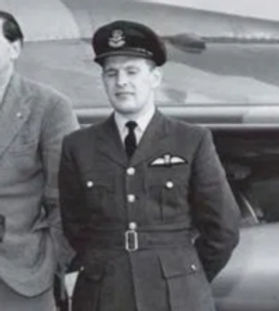
KINGSLEY, Flt Lt John Terrence Terry Kingsley was born in Nottingham in 1936. He joined the RAF in 1954 and had a long and varied service career. After a tour on 66(F) Sqn and a side trip to Maintenance Command Comm Sqn, he went to Ferry Command, where his Flight Commander was Ray Hanna. They delivered aircraft, well just about everywhere, including deliveries of 360 Hunters to the Indian Air Force. At CFS and two tours including being Flight Safety Officer and a Ground Instructor Terry managed to do more flying that the average squadron pilot; much to the surprise of his C.O. Eventually he won the posting of his choice to a Hunter Fighter Recce job and went to the refresher course at RAF Chivenor. While on the course he was contacted by his old Flight Commander and asked if he would like to join the Red Arrows, which he did during what are now recognised as their “vintage years”. Terry also took part in long distance air races and rallies in the late 60s and early 70s, including the London-Sydney Marathon, the London-Mexico Rally and the London-Victoria Air race. Terry’s final posting in the RAF was to 92 Squadron at RAF Gütersloh flying the Lightning as the squadron QFI. His final flight in the RAF was in the T4 “T” XM 995 on 20 September 1973 with his replacement in the right hand seat. That was Simon Morris After the RAF, Terry emigrated to Canada where he flew for various corporations including McCain Foods, Inco, Olympia & York and Bell Canada, while also starting and running several businesses. One of these involved acquiring obsolete fighter aircraft in Europe and Scandinavia and flying them to North America where he sold them to museums and private buyers. Terry’s rallying career continued in vintage Volvos for Volvo UK in the 1990s and he wass the only driver to finish all five events, the London-Sydney in 1968 & 1973, the London-Mexico in 1970 & 1995 and the Panama-Alaska in 1997. In retirement, Terry lived in Mississauga nearToronto from where he continued to pursue his interests in flying and motoring. If he added up all the aircraft types and variants in his log book the total came to nearly 170. Terry passed away on 31 March 2021 after a long battle with cancer and left his wife Betty. For the mechanically-minded and anyone with a sense of adventure his autobiography “In The Red” ISBN 1 85821 754 7 is a must to read. It carries a forward by the late Ray Hanna.

Please click on Paul's photo to take you to the time team web address, which is a fascinating programme about the excavation of his crashed Spitfire
KLIPSCH, Sgt Paul, Paul joined the RAF on 1st February 1933 as a 16 year old apprentice on Number 27 Entry at RAF Halton. Being a spirited youngster, he had, unbeknown to his parents and the RAF, bought a motor cycle which he kept hidden in the local village. His secret was revealed during the autumn of that year, when he crashed the motor cycle and broke his leg, effectively ending his apprenticeship. His father managed to stop him being thrown-out of the RAF, by making some assurances of his son’s future conduct and seeing to it that Paul was back at his workbench, complete with plaster-cast, just eight days after breaking his leg. He completed the rest of his apprenticeship without further drama and was posted as a fitter to 23 Sqn at Biggin Hill, Kent. Now, aged twenty, Paul had matured into a tall, dashingly handsome, rash, carefree young man, who was very popular with the girls. Within two months his squadron was posted to the Middle East and Paul throughly enjoyed his 28 days embarkation leave, living life to the full as usual. On arrival in Palestine during early April 1936, he was transferred to 6 Sqn. at ramleh, where he maintained its Demon and Gauntlet aircraft. Some six weeks after his arrival he was admitted to Sarafrand Hospital with a case of ‘gippy tummy’. Palestine offered Paul little in the way of ‘entertainment’ during his free time, so he took up horse riding at which he became quite accomplished. Good at his job and keen to advance, he was recommended for Pilot Training on 30th August 1938. He began his pilot training in August 1939 at 11 FTS RAF Shawbury. In october Paul met Peggy Young, a junior secretary for the Wandsworth Coke & Gas Lighting Company, at a dinner party and they began courting. The recommendation for pilot training proved to be well founded, Paul completed his training on 27th January 1940 with an 86.5% pass mark and qualified as a Sgt. Pilot. Paul and Peggy discussed getting engaged but postponed announcing a date until the path of the war was to take became clearer. His friends often commented that Paul had ‘mended his ways’ and was now a ‘one woman man’. Sadly on the first day the squadron engaged the enemy, on 23rd May that year, over Dunquerque, Paul’s Spitfire GR-H, registration number P9373 was shot down. Paul’s body lies in the village churchyard of Wierre-Effroy, Pas de Calais, France, close to where his aircraft crashed. Found by the eleven year old son of the village undertaker, who returned with his father and brother to the crash-site, took Paul’s body to the churchyard and with the local Priest, buried him. This “stranger” has never been forgotten by the villagers, his grave has been the focal point of their own ‘Remembrance Day’ ceremony ever since. A mystery still surrounds Paul’s grave, until recently on every anniversary of his death, flowers have appeared on his grave, delivered by an unseen, unknown person. Local rumour has it that it was the local spinster, who’s sweetheart had never returned. Equally plausible is the theory that it could have been one of his many broken-hearted girlfriends. Either way this carefree, likeable young man’s ultimate sacrifice has never been forgotten.

LEE, Captain Douglas, DFC Douglas Lee was born in Johannesburg, South Africa, on the 24th April, 1921. His parents were devout Catholics and he was schooled at Marist Brothers and completed his schooling at Jeppe High School. His father was a veteran of the Boer War, but some doubt exists concerning the side on which he fought. He never returned to his native Ireland, and was an exceptionally keen sportsman up until his death in 1937. Under his father’s influence Douglas took up boxing from an early age. He was also a keen rugby player in his school days. He completed an apprenticeship in the designated trade of Fitting and Turning on the 5th of July 1941, but had already attempted to volunteer for military service prior to this time. A letter from the OFFICE OF THE DIRECTOR GENERAL OF WAR SUPPLIES dated 20th February 1941 reads; Exemption From Military Service This office has been notified that you recently visited Roberts Heights with the intention of enlisting for Service with the S.A.A.F. As you have been exempted from Military Service by this Tribunal (Exemption Certificate No. 4075) you are not permitted to enlist and must remain in civilian employment. Notification of your action has been sent to the Military and Air Force authorities concerned for puposes of cancelling your enlistment and calling-up notice. It must be kept in mind that every South African combatant in World War II was a volunteer. One could volunteer to serve within the borders of South Africa only, or could volunteer for overseas duty. The “Red Tabs” on the epaulette of a serviceman indicated he had volunteered for duty outside of the borders of South Africa. Douglas managed to circumvent the regulations and commenced Training at No. 5 Air School, Witbank on the 5th April 1943. The aircraft was a Tiger Moth. The course ended on 12th June 1943, having logged 80 hours. The Assessment Of Ability read; 1. As a pupil pilot “Average” 2. Instrument Flying “Average Plus” 3. Night Flying “Average” Further training was undertaken at No. 25 Air School, Standerton, from 15th June 1943 until 25th October 1943. The aircraft was a Master II and the pilot had now logged a total of 240 hours. The Assessment Of Ability read; 1. As a pupil pilot “Average” 2. As a pilot navigator “Average” 3. In bombing “Average” 4. In air gunnery “Average” December 29th 1943 saw Douglas at No. 73. Operational Training Unit, Abu Sueir, flying Harvards. On the 12th Jan after 256 hours Douglas sat in his first Spitfire V. With 305 hours and 10 minutes logged Douglas arrived on 601 Squadron Venafro on May 1st 1944. Lieut. Beisiegel of 145 Squadron wrote to the family on 10th July 1944; I hate writing to you in this way but it is to tell you that Doug baled out today over enemy territory. He is quite O.K. and was seen floating down. It is more than likely that he will walk back into 601 fairly soon. It is frequently done, and if anyone can do it, Doug can. The log records baling out and landing among the French Corps on the 10th and being back on the Squadron on the 11th, earning 48 hours leave in Rome. Unfortunately, Don Beisiegel did not survive the war. On the 8th October Douglas was promoted to Captain and posted to 92 (E.I) Sqn. as “B” Flight Commander. With a tour of duty completed on the 27th December 1944, having logged 200 hours and 10 minutes of operational flying on 174 sorties, Douglas was posted back to the Republic of South Africa. Douglas returned to 92 Squadron for the months of May, June and July 1945. At his stage hostilities had ceased in that sector and no combat was seen. Major John E. Gasson wrote; Captain Lee carried out an exceptionally fine tour of operations, and in December 1944, was awarded the D.F.C. (Immediate) for his magnificent courage and devotion to duty, which was an example and inspiration to all. His immense popularity, his absolute reliability, and his instinctive ability to command made him an outstanding Flight Commander. On numerous occasions he deputised for me as O.C. of the Squadron, which duties he executed with great success, and had hostilities not ceased he would have risen far higher in the service. After the war Douglas returned to South Africa, where for some years he successfully owned a transport business and a stable of race horses. Douglas never seemed to adjust to civilian life and moved from one place to another. At the age of 52 he suffered a heart attack and afraid he would crash his car, walked six city blocks to the hospital. He stopped boxing after his father died. He said he boxed more because for his father than for his own sake. He never lost his obsession with horse racing. He died in June 2000 at he age of 79 and was survived by his wife, two daughters and Patrick, his son. DISTINGUISHED FLYING CROSS. Captain Douglas LEE (329130V). S.A.A.F.. 92 Sqn. M.A.A.F. This officer has set a fine example of skill and courage throughout a notable tour of operational duty. He has participated in a large number of sorties, many of them against targets in close support of our attacking ground forces, to whom the result of his accurate bombing of such targets as strong points, observation posts and gun positions have been of the greatest assistance. This officer has set the highest standard of devotion to duty.

MACKIE, Sqn Ldr Evan Dall "Rosie" DFC, RNZAF Evan Dail Mackie was born October 31st, 1917, in Waihi, New Zealand. After finishing the Waihi School of Mines, he became an electrician in the country's largest gold mine. January 19th, 1941, he joined the Royal New Zealand Air Force (RNZAF) as 'aircrew in training'. He learned to fly in a De Havilland Tiger Moth biplane and completed his training in Canada flying a North American Harvard. Once in England, he joined 485 New Zealand Spitfire Squadron in December 1941 as Pilot-Officer. March 26th, he shared the destruction of a Messerschmitt Bf 109. A month later, the squadron escorted a group of Hawker Hurricanes -Hurribombers- to Calais and Mackie probably destroyed a Focke-Wulf Fw-190. While heading home at low level, his port wing was hit by flak near the French coast but despite the damage to his aircraft, he returned to base safely. Early 1943, as Flying-officer, he was transferred to North-Africa to join 243 Sq. in Algeria flying Spitfires Mk V-c. Shortly after he was given command of a flight. In this theatre, his number of victories started to increase. In April and early May, he shot down two Junkers Ju-87 Stukas and five Messerschmitt Bf-109s. He shared another victory over a BF-109 and a damaged Focke-Wulf Fw-190. In this period, Mackie was awarded the Distinguished Flying Cross. June 1943, the squadron was transferred to Malta to take part in the imminent invasion of Sicily. Mackie was promoted to Acting Sq.Ldr and assumed command of the unit. July 4th, 1943, his unit was detailed to provide air cover to a formation of Boeing B-17 Flying Fortresses that was to bomb the city of Catania, Sicily. As the bombers left their target, six Bf-109's suddenly appeared. Although his guns were not functioning properly, he managed to set one of the opponents on fire but was subsequently assaulted himself. He succeede to escape with a dive to sea level and flew back to Malta. On his way home, he attacked a sailing ship south of the city of Augusta. Despite being fired upon by shorebatteries, he returned to base safely. July 5th, he was victoriouis again by downing a Messerschmitt Bf-109 and during that period, more victories followed. July 12th, he probably downed an Italian Macchi 202 and the next day shot three Junkers Ju-87's. Mackie's operational tour ended with the capture of the Sicilian airfields. He was awarded a bar to his DFC and in November was given command of 92 Sq. in Italy. During this period he shot down another four enemy aircraft, raising his tally to 16 up to February 1944. Prior to his appointment as supernumerary Sq.Ldr of 274 Sq. on the continent, Mackie served as Senior Stafofficer Training with Air Defence in Great Britain for six months. 274 Sq. was stationed at Volkel air base in the Netherlands, flying the Hawker Tempest. December 24th, 1944, over Malmedy in the Belgian Ardennes, he downed a Focke-Wulf Fw-190 that had just shot down two Canadian Hawker Typhoon fighterbombers. In all probability, Mackie had shot the German Ace (28 victories) Hauptmann Wolfgang Kosse. Early January 1945, he was given command of 80 Sq., also stationed at Volkel. During the subsequent period he downed a Bf-109 on January 23rd, a Fw-190 on March 7th near Hannover and two Arado Ar-96's trainers on April 9th. April 15th, he shared the destruction of another Fw-190. At the end of January 1945, he was awarded the Distinguished Service Order and in April, he was promoted to Wing Commander. April 19th, he was appointed commander of 122 Wing, a post he held until September 1945. May 4th, 1945, he led a formation of eight Hawker Tempest fighters of 486 Sq. to an area around Kiel-Haderslev. The squadron claimed the destruction of three Fieseler Fi-156 Storch aircraft on the ground. Mackie ended the war with 21 victories confirmed and one shared. In addittion to his British decorations, he was also awarded the US Distinguished Flying Cross. Back in England, he married a WAAF sergeant, Marjorie Dear and completed a staff course at the RAF Staff College. The RAF, as well as the RNZAF asked him to stay on but he refused. He did not feel like playing the war games usually played at staff school and no longer saw any purpose in them. November 10th, 1945, he made his last flight as pilot-in-command of a Percival Proctor and returned to New Zealand in 1946. He took up his former job and retired as Chief Inspector with the Tauranga Electric Power Board in 1978. He died April 28th, 1986 in Tauranga hospital at the age of 68.

McGOWAN, Plt Off Robert Henry Robert Henry McGowan of Aigburth, Liverpool was born on 2nd March 1916, the son of William Fergus McGowan (1875-1920) and Janet Agnes McGowan (nee Leask 1879-1948). His father served in the Lancashire Fortress Company, Royal Engineers in WW1. He joined 611 Squadron before the war as an Aircrafthand. He later remustered as an Airman u/t Pilot and began flying training. He was called to full-time service on 24th August 1939 and completed his training at 2 FTS Brize Norton. He married Joan Cartwright in July 1940 in Liverpool. He was then commissioned and posted back to 611 Squadron on 10th August 1940 but then went to 7 OTU Hawarden to convert to Spitfires. McGowan was posted to 92 Squadron at Biggin Hill on 6th September. 611 Squadron wanted him back but his posting was confirmed on the 12th. Two days later McGowan was shot down by Me109's, he baled out, wounded, and was admitted to Faversham Cottage Hospital. His Spitfire crashed at Sole Street House, near Faversham McGowan was transferred to the RAF Hospital Halton and went on to the RAF Convalescent Centre at Torquay on 11th October 1940. He rejoined 92 Squadron on 25th November and was posted the next day to 15 FTS Lossiemouth. From there he went to CFS on 22nd March 1941 for an instructor's course. He subsequently served as an instructor at Moose Jaw, Saskatchewan, Canada. By late 1944 he had returned to the UK and was serving as a Flight Lieutenant with 189 Squadron, a Lancaster bomber unit stationed at Fulbeck. McGowan was killed on 22nd December 1944 piloting Lancaster PB289 CA-B on a sortie to Politz. The aircraft was lost without trace.

MCCANN, Flt Lt Eric William, RCAF He was killed whilst flying in Spitfire VIII, JG121 of No 92 Sqn, which crashed and blew up whilst making a forced landing having been hit by flak during a strafing attack near Ravenna. He is buried in Ravenna War Cemetery This pilot flew Spitfire fighter aircraft for the RCAF / RAF (60% of all RCAF personnel served in RAF units at some point) in WWII, this record has come from the database of Mr. Halliday, a Canadian military historian.

MORRIS, Flt Lt Simon Simon was born in Hertfordshire and was brought up in Bahrain, Malaya and Tanganyika, East Africa. He was sent to King’s School Rochester in England, as a boarder, in 1960. At school he was a leading member of the CCF’s RAF section and won a RAF scholarship. He learnt to fly at the age of 17 at Biggin Hill, going Solo after 6 1/2 hours. RAF Career. Simon entered the RAF in February 1970 and was commissioned on the 9th October. Posted to RAF Linton-on-Ouse for basic Jet training and RAF Valley for advanced Jet training then RAF Chivenor on the Hunter. Posted to Lightning OCU at RAF Colitishall May 1973. Posted to 92 Squadron RAF Gutersloh August 1973 aged 23. Left Gutershoh when 92 Lighnings were disbanded in April 1977after handing over the squadron standard to 92 Phantoms. Posted to CFS at RAF Cranwell then to the Hawk at 4 FTS RAF Valley. Simon left the RAF in May 1981 to fly as a company pilot for Ferranti. He joined the RSAF (Singapore) in October 1983 as a PAI until August 1985 then worked for the British Aircraft Corporation as a QFI on Strikemasters in Riyadh, Saudi Arabia until February 1987. He then flew the BAe 146 for Air Foyle for a year before joining British Caledonian Airways in Feb 1988. He flew BAC 1-11 until BCal merged with British Airways, then flew the Lockheed TriStar. He was posted to the first course on the new Boeing 747-400 in October 1989 and based in Sydney 1990 & 1991. Simon was promoted to captain on the Boeing 737-200 in May 1993 based at Birmingham, then posted back to Heathrow on the 747-400 in 1995 and to the Boeing 777-200 in 1999 until he retired in 2005, aged 55. Simon now divides his time between homes in Chiang Rai in Northern Thailand, the Sunshine Coast, Queensland and Calgary, Alberta visiting each location a couple of times a year. The rest of the time he sails a classic sailing schooner SIRIUS which was launched in 1935. Simon married Georgina in the Station Church at RAF Gutersloh in 1974 the marriage was dissolved in 1992. He has two children and five grandchildren living in Queensland and a daughter and another two grand daughters in Canada

MOTTRAM, Flt Lt Roy Roy Mottram was born on 28th March 1917 in Harlesden, Middlesex, the sixth child of seven, to parents Richard Henry (Harry) Mottram a commercial traveller in Sports Goods and Jane (Jennie) Wyke. In September 1924 Richard died, Jennie as a single parent of seven children moved the family to Shropshire (Jennie was from Shrewsbury). Jennie’s elder brother owned tea rooms at The Chalet Pavilion in the picturesque Carding Mill Valley in Church Stretton, Shropshire, now owned by the National Trust. The family moved into the Chalet and Jennie ran the tea rooms until the outbreak of war in 1939. Roy was educated at the local school in Church Stretton and then went on to the Priory Grammar School for Boys in Shrewsbury. (The school is now a sixth form college but Roy is remembered there on the Roll of on Honour above the main entrance) After finishing school Roy went on to train as a dental technician at the local dental practice in Church Stretton, where Dennis, one of Roy’s elder brothers, 5 years older, already worked. Reaching the age of 21 in 1938 Roy decided he wanted to join the RAF. This he did and joined on the 24th August 1939. Originally he was destined to begin his training at Aswan in Egypt, however war was looming and he headed to 3 E&RFTS Burnaston Hall, Derby., where he did his initial flying training (first solo on 13 Sep 1939) and gained his “Wings”. On completion of his initial flying training (23 Oct 1939) he was given rank of Acting Pilot officer, fitted for his uniform and then on 4 Nov 1939 posted to 14 FTS RAF Kinloss on the Moray Firth in Scotland for Advanced Flying Training. On 20th April 1940 Roy completed his flying training and was posted to 92 squadron (F) at Croydon with his fellow pilot from Derby and Kinloss P/O Cecil Henry (Sam) Saunders. His first weeks were not without incident because on the 27th April 1940 he was required to perform a wheels up landing due to undercarriage problems, A540 extract follows. 27.4.40 Fairly fine weather but bad visibility at first. Later general flying practise was possible. P/O Mottram, who had taken off at 1430 in a Spitfire noticed that his starboard wheel would not come up, nor would his port wheel go down. After getting into R/T touch with Runick, and through them with the C.O. who made various suggestions to P/O Mottram and after considerable time had elapsed, it was found possible to retract the starboard wheel and hold it up by constant pumping. At 1700 hours with the starboard wheel down about 45 degrees, P/O Mottram made a perfect “ventre-a-terre” landing before a large and enthusiastic audience, doing the minimum amount of damage under the circumstances and with only 10 gallons of petrol left. Throughout May the new pilots to the squadron including Roy continued with their training while the more established pilots took to operations over the French coast because of the German advance around Dunkirk. Roy joined the fray on 28th May with his first offensive patrol Ostend - Dunkirk. In June 1940 the squadron were moved out of the front line to Pembrey in South Wales. Prior to the war Roy was in a relationship with a young lady, Sybil Tudge, who lived near the Shropshire Herefordshire border. Throughout his time in the RAF Roy would visit any time he could. He would fly to a nearby airfield and she would travel to meet him. However, while at Pembrey he befriended a young WAAF officer, Bunty Nash who was a “Cipher Queen” stationed at Pembrey. When three months later 92 were thrust back into the thick of it, moving to Biggin Hill, he corresponded with Bunty updating her on the progress of 92 and his fellow pilots. Extracts from one of these letters was used by Patrick Bishop in his excellent book “Fighter Boys” published in 2003. Bunty had kept these letters from Roy and other pilots of 92 Sqn and donated them to the RAF museum at Hendon. This prompted Bunty, now an 80 year old widow to contact him. He included details of his contact with Bunty as an appendix in the paper book reprint, where she tells of her special friendship with Roy and his invitation to her to attend a squadron party. 92 were famed for their partying. The squadron move to Biggin Hill in early September saw 92 involved in the thick of the battle culminating with Roy being shot down on 18th September 1940. Roy sustained burns and he was hospitalized for 2 weeks, returning to action on 12th October 1940. On 21st December 1940 fighter command issued orders to recommenced offensive fighter sweeps over enemy territory for the first time since Dunkirk and on 27th December 1940 Roy together with Alan Wright went on the first “Mosquito” patrol over northern France. A month later “Mosquito” was subsequently changed to “Rhubarb” to prevent confusion with the introduction of a new aircraft of that name. Roy attained the rank of P/O on 20 April 1940, confirmed on 24 August 1940. Roy attained the rank of F/O on 20 April 1941, On 18th June 1941 Roy moved to 54 Squadron at Hornchurch as flight commander of ‘A’ Flight in the rank of Acting F/Lt. The summer of 1941, with the increasing activity by fighter command on operations over Northern France and Belgium, Many experienced fighter pilots were lost and after over 16 months of continuous operations Roy was to be no exception. On 31st August 1941 Roy did not return from a bomber escort operation to Lille in Nord France. A540 (54 Squadron) extract for 31st August 1941 follows - (Hornchurch) At one point, Roy Mottram is seen making a turn away towards some enemy aircraft. He became involved, but seemed able to cope with them. He was heard on the radio to say that he would spin out but he did not return, and so we lost lost one of the best flight commanders that any squadron would wish to have. A540 (603 Squadron) extract for 31st August 1941 follows - (one of the other Squadrons based at Hornchurch) F/Lt. Mottram of 54 Squadron was lost. He was last seen being pursued by six ME.109 E’s between Poperinge and the coast. The squadron were unable to catch up with the 109’s. A540 (54 Squadron) extract for 23rd October 1941 follows - (Hornchurch) Today news came that F/LT Roy Mottram was killed. This is a big disappointment for everyone hoped very much that this excellent friend might be safe. An interview with an eye witness in recent years revealed that he was attacked by an enemy fighter, his plane entered a spin, a wing broke off and then crashed to the ground in the village of Neuf Berquin. Roy did not bail out. The Germans took several days to excavate the site and Roy Mottram was finally laid to rest in the Communal Cemetery in nearby Merville on the 8th September 1941. Adrian Mottram 2019 Ade Mottram “ My 40 year journey” Growing up as a child, there was a photo of an airman on the mantelpiece in the front room. Uncle Roy, dad’s brother, he was killed in the war, shot down, a pilot with 92 squadron In 1979 I was sat at home when my wife Jan, who was reading the Daily Telegraph Magazine, asked me, what was uncle Roy’s Squadron? It turned out that there was an article about Battle of Britain pilots ( it was mid-September) and there was a picture of 92 squadron including Roy. I couldn’t ask dad about it (he had died 2 years earlier) so I took it to show Uncle Eric on our next family visit. He was well chuffed!. He told me to go to the bureau in the front room and fetch a book out. The book turned out to be Roy’s Pilots log book, folded up in the back was Roy’s Commision. Then out came Roy’s own photograph album, so there it was, the inspiration to find out more about Roy’s war. Visits to the Public Records Office at Kew. Squadron records, combat reports. in 1983 I took the logbook to the RAF museum at Hendon to be copied onto microfilm. I visited the Imperial War Museum in search of more photos. The visit to the RAF museum meant they had my contact details for returning the logbook so about 10 years ago the museum contacted me on behalf of a publisher for permission to publish a letter Roy had sent to a young WAAF officer. She had deposited a collection of letters sent to her after 92 sqdn had transferred from Pembrey to Biggin Hill in September 1940. But, what had happened to Roy. The family new that he had been shot down and was buried at Merville in North France near the city of Lille. I visited the grave in 1982, cousin Jane also in 1982, my brother Keith, over from Canada, in 2015. But where did he die? what happened to him. In 1983 I wrote to the International Red Cross, they say he had died at Neuf Besuin on 31st of August and buried on 8th September at the CWGC cemetery in Merville. I could not find Neuf Besuin but Neuf-Berquin was near Merville, was it there. Over the years searching for Roy Mottram RAF on the internet has thrown up many and varying results (including one of his ghost haunting the RAF chapel at Biggin Hill! then this summer (2019) “Eureka”. A search found a 2005 blog where this was posted “I’m looking for details about Flight Lieutenant Roy MOTTRAM, 42870, killed in action on 31 August 1941 and buried in Merville, France. He was then a Flight commander with No. 54 Squadron since mid June 1941, and had previously served with No. 92 Squadron.” This was posted by a French aircrash enthusiast who lives in the area between Merville and Lille who was able to confirm the crash site and from eye witness accounts, an idea as to the events leading up to the crash. The following entry are narrative extracts from Roy Mottram’s Combat reports. Combat report 25th July 1940 16:20 hours. Roy Mottram 92 Squadron 10 miles east of Fishguard, attack on Junkers 88 “First Hun” ( Roy’s annotation to the event in his Flying Logbook) I was Blue 3 and ordered to patrol Tenby. Aircraft was sighted at 20,000 feet when patrol was at 11000 feet. We climbed in pursuit and enemy disappeared in cloud, it left a thin trail of exhaust which helped us follow. It emerged from the cloud after one minute and we caught it 10 miles inland of Fishguard.I went 500 yards abreast of port wing and turned in on a beam attack from 200 feet above. I opened fire at 200 yards and finished in an astern attack at 80 yards, during this attack I gave three bursts of 4 3 and 2 seconds. Aircraft had then turned from a N. E course to W and disappeared in cloud. I followed a trail of black smoke and delivered another beam attack of 2 seconds from the port side. The rear gun was pointing in port direction but no fire was observed. I then did another beam attack (2 sec) on the port side and broke away in front of the enemy aircraft to deliver a head on but lost aircraft in cloud at 19,000 ft. I searched for five minutes and climbed through clouds to 27,000 ft and was the ordered to pancake at base. When aircraft was last sighted it was heading in a west direction with thick black smoke coming from starboard engine and a thin trail from port engine. Combat report 15th September 1940 14:30. Roy Mottram 92 Squadron Maidstone - Ashford, 1 HE.111 destroyed, 1 Do.17 damaged. I was blue 2 ordered to patrol with 92 Squadron over Hornchurch, angels 20. Being separated from the rest of the Squadron I climbed into sun until I reached 20000 feet. I saw two formations of Hurricanes to the east and further east was amass of about 70 aircraft. About 5000 feet below were several Dornier 17’s. I chased one to the top of the clouds and opened fire on its starboard engine for 20 yards. As it went into cloud I closed up to about 40 yards and gave each engine a 3 second burst. As visibility was bad I could I could not see any effect and eventually lost it in the thick clouds. I then went through the clouds and waited beneath base at 6000 feet. After a couple of minutes a He.111 appeared and I did a quarter attack on the starboard engine. Smoke came from it and after two more attacks flames appeared and the aircraft started losing height rapidly I made two more attacks from the beam and then watched the aircraft crash in a field in the Ashford district. Combat report 20th October 1940 12:30 hours, Roy Mottram 92 Squadron East of Tonbridge. 1 Me.110 destroyed (shared with 222 Sqdn) I was Red 2 in Ganic Squadron and when on Maidstone patrol line at 1500 feet I saw a smoke trail coming from the S.E. at 25000 feet. Ganic leader led the Squadron and when at 20000 feet enemy aircraft turned back on reciprocal. It then started to dive and I broke away to follow. I was unable to catch up with it and lost it until 5000 feet when I found another Spitfire chasing it. The pilot of the enemy aircraft was making good evasive tactics doing steep turns, diving and climbing very quickly. I eventually got within range when aircraft was 300 feet high and got in a short quarter attack and then a 4 second burst from astern at 300 yards. I broke away above the aircraft and as the enemy aircraft avoided another Spitfire I got in a 5/6 second burst when it did a steep turn - aiming a length and a half in front. Smoke started from both engines but the pilot still continued evasive steep turns. Two more Spitfires joined in the fray and after several bursts the aircraft landed in a field with both engines blazing. Combat report 26th October 1940 10:40 - 10:50. Roy Mottram 92 Squadron, Tunbridge Wells. One Me.109 probable I was red 2 with leading Section of Ganic Squadron. Enemy aircraft were at 15000 feet and we were at 20000feet. Ganic Leader dived to attack and I singled out an Me.109 that broke from the main force and started to dive into clouds. It pulled out of the dive before reaching cloud and started to climb rapidly. I cut out of the dive and when the aircraft was still climbing I gave a short burst from 300 yards astern. The enemy aircraft flattened out a bit and I closed up to 200 yards and gave a 3 second burst from dead astern. Small bits seemed to fly off the wings and white smoke came from the starboard side of the fuselage. I gave another 2 second burst and more smoke came from the fuselage. Another Spitfire did a quarter attack on this machine and I broke off the engagement. Combat report 17th November 1940 16:15 hours. Roy Mottram 92 Squadron, Brighton. 1 Me 109 damaged. I was green 1 in Garrick Squadron, and weaving for the squadron. About 10 enemy aircraft were sighted at 24000 feet and Garrick leader led the Squadron into attack. I singled out the rearmost 109 and did a quarter attack opening fire from 300 yards and closing in with a 4 second burst. The perspex inside the cockpit immediately iced up and vision was reduced to nil. Had it not been for this, I could have observed the effect of my fire, and taken the necessary action to finish off the combat. Combat report 16th May 1941 15:20 hours, Roy Mottram 92 Squadron, 15 miles south of Dover. 1 Me.109 destroyed (1/4 share) Garrick Squadron patrolling Dover - Dungeness 15,000 ft. Two 109’s sighted flying over Dover turning toward French coast. F/Lt Wright made short opening attack nearly head-on. I made quarter astern attack opening 200 yds. closing 50 yds. and breaking off when another Spitfire was also firing from 50 yds. F/Lt Wright made another long attack and so did Garrick Leader (S/L Rankin) and F/O Wade. E/A was last seen diving vertically pouring out black smoke at 7000 ft. about 15 miles south of Dover. S/L Rankin 120 rounds Cannon; 1400 browning. No stoppage. F/Lt Wright 120 rounds Cannon; 1400 browning. No stoppage. F/O Wade 56 rounds Cannon; 600 browning. one misfeed F/O Mottram 96 rounds Cannon; 1400 browning. ejection stoppage. Combat Report 25th June 1941 12:15 hours. F/Lt. Mottram 54 Squadron, Gravelines 1 Me.109E Destroyed My Section (Yellow) whilst flying at 18,000 feet towards Gravelines, just about to cross the French coast, was ordered to attack 4 Me.109 Es flying below and away from us, still climbing. I ordered the section to attack, and I saw one straggler about 400 yards behind the main formation, so I chose him to attack. I dived gently onto his tail, he still flew straight and level. When I was at very close range I fired 2 short bursts from almost dead astern. There was a large red explosion at the ring roots - the aircraft turned over and I last saw it dive down out of control. Combat Report 26th June 1941 11:50 - 12:10 hours. F/Lt. Mottram 54 Squadron North of Gravelines 1 Me.109 E Probable. I was Yellow 3 flying parallel with Yellow 1 an 2 returning from Dunkirk to North Foreland at 15,000 ft. when yellow 1 sighted 2 Me.109 E’s about to attack a lone Spitfire at 9,000 ft. We dived down but were unable to prevent the e/a attacking the Spitfire, the pilot of which subsequently baled out. Yellow 1 and 2 engaged one Me.109 E and myself and Yellow 4 engaged the other. I gave a short burst from astern quarter at 150 yards, whereupon the e/a showed signs of returning the compliment. After a series of short turns, quick dives and climbs, the e/a dived to about 5,000ft. and pulled into a steep climb. I overhauled him and he tried to return to the right at the top of his climb, when I got in a lovely burst and the e/a slowly turned to the left and began a shallow dive towards Dunkirk with black and white smoke coming from the engine. The e/a did not try any more evasive tactics and after two more long bursts from astern, tracers hitting the e/a on each occasion, I broke off at 1,000 ft. a mile from Dunkirk beaches with e/a still slowly losing height. Combat Report 8th July 1941 06:30 hours. F/Lt. Mottram 54 Squadron, Lille. 1 Me.109 E Probable I was Yellow 1 flying south at 19 - 29,000ft north of St. Omer, when three aircraft approached from the east at my height. I recognised them as Me.109’s E and fired a long burst at the last enemy aircraft - a quarter astern attack from slightly above. The enemy aircraft dived down steeply with grey and white smoke pouring out from both wing roots and I last saw it at 4-5,000 ft.


No
picture

O'BRIEN Sqn Ldr Joseph Somerton "Spike" DFC Joseph Somerton O'Brien was born 9th April 1912 in India, the son of Wulstan Hubert O'Brien (1883-1917) and Edith Muriel O'Brien (nee Somerton 1885-1971). His father, a Major in the Inland Water Transport, Royal Engineers was killed on 7th February 1917 aged 33 and is buried in La Gorgue Communal Cemetery near Merville. His father's brother, 2/Lt. Francis Joseph O'Brien, was killed in action on 31st July 1917 aged 31 serving with the 1st Battalion, Worcestershire Regiment. He is commemorated on the Menin Gate at Ypres. JS O'Brien trained on HMS Conway for a career in the Merchant Navy. After spending several years at sea, he joined the RAF on a short service commission in March 1934. He completed his flying training at 3 FTS Grantham and joined 3 Squadron at Kenley on 16th March 1935. He went with it to the Sudan in September, during the Abyssinian crisis. Back in the UK, he joined 23 Squadron on 9th July 1936. He married Marguerite Josephine O'Reilly in July 1938 in Wandsworth. After war broke out O'Brien was a Flight Commander, still serving with 23 Squadron. His promotion to Squadron Leader was gazetted on 1st June 1940. On the night of 18/19th June O'Brien was captain of a Blenheim which shared in the destruction of a He111 near Cambridge with a Spitfire, flown by Petra of 19 Squadron. Both British aircraft were shot down by return fire. O'Brien baled out but his observer, P/O King-Clark, and his gunner, Corporal Little, were both killed. O'Brien received a Mention in Despatches (gazetted 11th July 1940). He left 23 Squadron shortly after this to take charge of the Operations Room at Pembrey. On 1st July 1940 he joined 92 Squadron there as a supernumerary Squadron Leader. Awarded the DFC (gazetted 30th July 1940), O'Brien took command of 234 Squadron at St Eval on 17th August. He shared in the destruction of a Ju88 on the 21st and destroyed a Me109 on the 24th. O'Brien was presented with his DFC by the King at Buckingham Palace on 3rd September. He destroyed two more Me109s on the 6th. He was shot down and killed in combat over St. Mary Cray the next day. His Spitfire, P9466, crashed near Biggin Hill. O'Brien was 28 and is buried in St Mary Cray Cemetery. Orpington, Kent.
OLDFIELD, Sgt Trevor Guest Trevor Guest Oldfield was born in April 1919 in London, the son of Archie Oldfield (1884-1966) and May Florence Oldfield (nee Guest 1890-1975). He joined the Auxiliary Air Force in early 1938 serving as an Aircrafthand at RAF Kenley with 615 ‘County of Surrey’ Squadron. A year later he elected to change his trade to qualify as an armourer and with the onset of war he was called up to full-time service in August 1939. He was recommended for pilot training and began his initial training at 5 EFTS Meir near Stoke-on-Trent in Staffordshire. In early August he completed his flying training and converted to Spitfires at an OTU. He was posted to 64 Squadron in early September 1940 but shortly afterwards he was sent to 92 Squadron at Biggin Hill. Oldfield is recorded as having flown on his first operational sortie with 92 Squadron during the late afternoon of Saturday 21st September 1940, but the patrol proved uneventful. On Thursday 26th September, Oldfield accompanied P/O A Wright on a patrol over Tenterden at around 16:00 hours, in which they stalked a Do17 that kept dodging in and out of cloud before P/O Wright put in a sustained burst of fire at very close range. Their prey disappeared into cloud, but P/O Wright submitted a claim for a destroyed Dornier. The action for ‘Ganic’ Squadron began early on the following morning of Friday 27th September with a ‘Scramble at 08:45 hours, but in the ensuing combats the squadron lost F/Lt. J Paterson and F/Sgt. C Sydney, both killed. Just before midday 92 Squadron were scrambled again and Oldfield, flying as Green 4, found himself in the position of ‘weaver’. The following is taken from his subsequent combat report: I was Green 4 detailed to weave above the squadron formation. When in the Canterbury area I was weaving approximately 1000 feet above the squadron when the squadron split up and engaged the enemy (Me109’s). Owing to my being above the squadron I was able to turn sharply to the left and attacked a Me109 from quarter astern. I saw pieces fly off the enemy aircraft near to the wing roots after I had given him a 3 second burst. I had only time to see him half roll and dive away before I spun out. I could not see whether the aircraft crashed but about 2 minutes later I saw someone making a parachute descent After the squadron had returned from the patrol the Intelligence Officer drew up their respective accounts of the combat. The consensus among the pilots was that as no one else could stake a claim the individual making a parachute descent must have been Sgt Oldfield’s victim. The squadron was scrambled shortly afterwards at 1445, Sgt. Oldfield, in R6622, and nine others intercepting Ju88s and their high-flying Messerschmitt fighter escorts. Only nine aircraft returned to Biggin Hill at around 15:50 hours and it was subsequently found that Oldfield had crashed onto Hesketh Park in Dartford at about 15:15 hours. Eye witnesses on the ground claimed that the pilot had stayed with the aircraft in order to steer away from housing. The Spitfire had disintegrated on impact and Oldfield was killed. He was buried in St. Stephens Church burial ground, Chertsey, Surrey, his inscription reads: TO THE TREASURED MEMORY OF OUR BELOVED SON SGT.PILOT TREVOR GUEST OLDFIELD KILLED IN ACTION SEPT. 27TH 1940. AGED 21 YEARS NOT JUST TODAY, BUT EVERY DAY IN SILENCE WE REMEMBER
PATTISON, Sqn Ldr John Gordon DSO, DFC John Gordon Pattison was born at Waipawa, New Zealand on 27th January 1917 and was educated at Wanganui Collegiate School. He then farmed with his father and also joined the Civil reserve of Pilots, training at Bridge Pa, Hastings, by the outbreak of war he had logged 20 hours. He immediately volunteered for the RNZAF and went for training at Weraroa Ground School. He then went to 2 EFTS at New Plymouth and then 2 FTS Woodbourne, qualifying as a pilot on 23 April. He sailed for the UK aboard RMS Rangitata on 7th June 1940. Arriving in the UK, he was posted to 7 OTU Hawarden on 4th August and after hurried conversion to Spitfires he joined 266 Squadron at Wittering on 27th August. His first sortie resulted in him getting lost, running out of fuel and coming down in a field full of anti-invasion obstacles. Locals, thinking he was German, threatened him with pitchforks. On 14th September he was posted to 92 Squadron at Biggin Hill. He was shot down by a Me109 on the 23rd and was badly wounded in the thigh. He then spent eight months in various hospitals before rejoining 92 on 1st June 1941. His next posting was 61 OTU at Llandow, Wales as an instructor. However he flew under the Severn railway bridge and lost three months seniority as a penalty. On 13th April 1942 he joined 485 Squadron, one of the three squadrons in the Kenley Wing. on 26 April 1942 while escorting Hurricane bombers attacking Calais, 485 was jumped by a large force of Fw190's and lost four Spitfires. Pattison's Spitfire (BM267) engine was hit and knocked out by a cannon shell and his cockpit filled with smoke. He glided his aircraft across the Channel, baled out near Dungeness and was rescued by an ASR launch 90 minutes later. After a year flying attacks over France, Pattison was posted on 7th July 1943 as chief flying instructor at 56 OTU Kinell. He returned to operations on 3rd March 1944 with 66 Squadron at North Weald. On 8th September 1944 Pattison was posted as CO of 485 Squadron at Caen in France. Pattison returned to New Zealand in January 1946 with a record of two enemy aircraft destroyed and many ground vehicles to his credit. He was awarded the DSO (gazetted 20th March 1945) and DFC (gazetted 16th May 1944). DSO Citation "This officer has completed a third tour of operational duty. He has displayed the highest standard of skill and courage and throughout his devotion to duty has been unfailing. He has shown the finest qualities of leadership both in the air and on the ground and his sterling work has contributed in good measure to the success of the squadron he commands. Within recent months, Squadron Leader Pattison has destroyed very many enemy mechanical vehicles and shot down 2 enemy aircraft." He farmed for the rest of his working life in Waipawa before retiring to Havelock North. He died on 11th September 2009 in Hastings, New Zealand . He is survived by his four sons and their families.
SARLL, Flt Lt George, Robson, Gratwick, RAAF George Robson Gratwick Sarll joined 92 Squadron on 29th August 1944
Flt Lt Bob Smith, Click on image for article on Bob

STONE, Air Commodore, Ronald D "Chris" AFC Chris was born and raised in East Anglia in the 1930s. World War 2 came when Chris was a young schoolboy which for him, and his friends in their formative years, was a fascinating time as they witnessed the massive buildup of airfields around their homes. Chris clearly recalls events at a nearby USAAF base when, at the impressionable age of 11 years, he watched as B-26 Marauders of the 9th Air Force were prepared for their daily bombing missions; but not knowing at the time that this was a final phase of the Allied softening up of enemy defences in preparation for D-Day. Later in life as an artist, Chris transformed these boyhood memories of 1944 into a painting that he entitled “When I Grow Up”. For sure, this was the inspiration for him joining the Royal Air Force as soon as he could after leaving school. Chris received his flying training at Cottesmore, and gained his ‘wings’ on Harvards in the Summer of 1952. Again, Chris has recalled that long ago personal thrill of “Going Solo” for the first time, in a painting entitled just that. The happy event took place at Woolfox Lodge, a disused WWII airfield used by Cottesmore as a satellite landing ground. After a couple of circuits there one cold January morning, the instructor said make a ‘full stop’ and taxy around to the threshold. Whereupon he dismounted, shouting before dropping off the wing, “bring the b****y thing back in one piece”. This no doubt resonates with many. By the end of that year, following advanced and operational training on Meteors at RAF Full Sutton and Stradishall, he was posted to 92 Squadron at RAF Linton-on-Ouse in Yorkshire. There he flew Meteor 8s until the Squadron converted to the F-86E Sabre starting in February 1954. During this first tour Chris attended the PAI Course at Leconfield, and became the Gunnery Instructor on 92 Squadron until tourex in July 1955. Chris recalls some of the hard Yorkshire winters at Linton, and the primitive snow clearance plan, during this time. This basically comprised issuing gardening spades to all junior pilots to chip away ice on the ASPs and runway threshold! Once more, he has captured the memory of these times as a pair of 92 Squadron Meteors line up on an early morning icy runway. Chris’s RAF career after 92 Squadron included flying tours as an instructor at both the Fighter Weapons, and Day Fighter Leaders School, and as a Flight Commander on Hunters in Germany. Then there were tours as a Flight Commander on Lightning Mk3s, followed by command of a Mk 6 Lightning squadron at RAF Leuchars. He considers his final ‘enjoyable’ time in the RAF being station commander at Wattisham flying F-4 Phantoms. Chris took early leave from the RAF in 1983 to join Hughes Aircraft Company directing their new business opportunities in South East Asia until 1995 when he finally retired to Virginia in the United States.


Wing Commander Bastian Maitland Thompson Bastian Maitland-Thompson was born on 19th January 1916 and lived at Brondesbury Park, Middlesex. He was public-school educated and opted for a career in law and local government. At 6ft 4ins and seventeen stone he was made for rugby and played for the well-known Harlequins. Despite his size he was accepted for pilot training with the RAFVR and this led to him being called up on 1st September 1939 and posted to 3 ITW at Hastings. Flying training was completed at 8 FTS, Montrose followed by a posting to No.1 School of Army Co-Operation at Old Sarum. After two months service with this unit he was posted to 92 Squadron with Spitfires at Biggin Hill. The available records do not show whether he brought down any enemy aircraft during the Battle but he was still with 92 on 9th May 1941, when he was returning from an offensive patrol very short of fuel. On approach to Biggin Hill his engine coughed and stopped. Unable to gain height he crashed into the side of the valley next to the airfield. When his fellow pilots rushed to the crash site they found Bastian staggering up the hill with a bloodied face and dragging an injured leg. He greeted his CO with I'm sorry, I seem to have made a ******* mess of my aircraft. Further on at the end of a large furrow they found a steaming engine, torn from it’s mountings and resting beside the cockpit, the port wing lying several yards away and the tail at ninety degrees to the rest of the fuselage. Bastian's assessment had been very accurate! He was almost as badly damaged as his aircraft and had to spend the next two months on sick leave. The aircraft was beyond repair. On 27th July Maitland-Thompson was promoted to Flying Officer, his last flight with 92 was on 17th September 1941 at Gravesend, Kent. He moved to 51 OTU at Cranfield, Bedfordshire on 18th November 1941, on a night-operations course for Blenheim and Beaufighter pilots. The New Year saw him return to flying duties with 29 Sqn at West Mailing, Kent. 1942 had further significance for him as on 27th April he was married at Christ's Church, Mayfair, London to Jean, a twenty-three year old war-widow. She was very petite and had formerly been a ballet dancer, the Biggin Hill Chaplain Douglas O'Hanlon performed the ceremony. Physically they were complete opposites but they were devoted to each other. He also acquired a very small car, an Austin 7, which to onlookers he appeared to sit on, rather than in. Apart from a week's course on beam approaches in the middle of June he remained with the squadron until 3rd October 1942. Rested from operational duties he was posted to 54 OTU at Charter Hall as a Flying Instructor, reporting for duty on 11th October. Sixteen days later he was promoted to Flight Lieutenant and after his spell of instructing he was posted back to flying operations with 604 Squadron at Scorton, Lancashire where he reported for duty on 25th May 1943. His black collie dog George had accompanied him to 604 and often flew seated on the navigator's lap. He was promoted to Acting Squadron Leader in July 1944 and after several more operational sorties he was "time expired" and was once again posted back to 54 OTU for another spell of instructing. With the Allied forces advancing towards Germany Maitland-Thompson was posted to command 219 Squadron with the rank of Acting Wing Commander at the end of March 1945. The squadron was based at Gilze-Rijen in Holland. At the end of hostilities he remained with 219 in Holland. On 28th July he and some junior officers crossed the border into Germany to visit an Officers Club for lunch. 0n the return journey along the Bergsteinfurt Road his jeep skidded on the wet road. His physique meant that he was partly outside the vehicle and his body impacted a tree, killing him instantly. He was buried in Enschede Eastern Cemetery on 1st August 1945. ******************** Bastian Maitland-Thompson was one of those Battle of Britain airmen that inexplicably vanished from the post-war records and he was only recognised in time for inclusion on the Battle of Britain Monument by Michael Robinson, whose diligent research for his book 'The Best of the Few' uncovered the details above.
SYDNEY, Flt Sgt Charles, Charles Sydney, of St Mary Cray, Kent, was born on 22nd July 1915 in St. Pancras, the son of Harry Sydney (1882-1953) and Eliza Emily Sydney (nee Burgess 1882-1961). He was educated at St. Mary Cray Council School then Bromley Council School. He joined the RAF in 1931 as an Aircraft Apprentice. He later volunteered for pilot training and qualified before the war began. He married Ellen Jane Mary Ryan in Southampton in January 1939. With his training completed he was posted to No 1 AACU. From there he was posted to 54 Squadron at Hornchurch on 6th September 1939. Sydney moved to 66 Squadron at Duxford on 28th September. At some later date he went to 6 OTU Sutton Bridge as an instructor. On 18th August 1940 Sydney joined 19 Squadron at Fowlmere. He moved to 266 Squadron at Wittering on the 24th and to 92 Squadron at Biggin Hill on 10th September. He probably destroyed a Me109 on the 15th. He was shot down and killed on the 27th, crashing at Station Avenue, Walton-on-Thames in Spitfire R6767. The site has been marked by a plaque (below). He was 25 and is buried in St Mary Cray Cemetery, Orpington, Kent.


This picture below has an
internet link, please click
WADE, Sqn Ldr Trevor Sidney "Wimpy", DFC, AFC Trevor Sydney Wade was born on 27th January 1920,and was educated at Tonbridge School. On leaving school at eighteen he joined the RAF Volunteer Reserve at 18, in April 1938 and learned to fly at Gatwick. When war came he took an instructor's course. Later he was posted to 92 Sqn,equipped with Spitfires and was in action against the Luftwaffe between May 1940 and October the following year. In the Battle of Britain and subsequent operations he destroyed seven enemy aircraft and in July 1941 was awarded the DFC. Trev baled out of his Spitfire I (3287) over Exeter while on night patrol at Swansea Bay. Wade crash landed a Spitfire I (R6703) near Selsey after being hit by the return fire of a Ju 88 over the Solent on the 19th of August 1940. His Spitfire I exploded after he had got clear, he escaped injury this time but was wounded again in June 1941 flying a Spitfire V. It was on 92 squadron that he acquired the nickname of ‘Wimpy’ from the newspaper Popeye cartoon. As with the Wellington bomber anyone or anything which was judged to be of portly appearance was instantly nicknamed Wimpy at the time. On 28 July 1940 during a night patrol he experienced R/T failure & with deteriorating weather he baled out of his Spitfire. His first action resulted in a claim for a shared JU88 on 19 August 1940, during which he was hit by return fire & had to force land on Macehill, Lewes race course. Having a lucky escape when his aircraft R6703 turned over on its back leaving him trapped inside, fortunately there was no fire. From August to December 1940 he was officially credited with 7 confirmed victories,& having to force land three times. His tour with 92 over he was sent to 123 squadron on training duties in June 1941. A D.F.C. Citation was published in the London Gazette on 15 July 1941, it read. This officer displayed great skill & determination in his numerous encounters with the enemy & has destroyed at least 6 of their aircraft, his efforts contributed materially to the success achieved by the squadron. Wade was posted as an instructor to an Operational Training Unit. After a course at the Central Flying School he became a pilot-gunnery instructor at the Central School of Gunnery. He was appointed as OC Flying at the Air Fighting Development Unit at Duxford. For his important work at the ADFU,he was awarded the AFC. After the war, he joined the editorial staff of The Aeroplane but in late 1947, he was approached by Bill Humble who required assistance in production testing of Sea-Furies at Langley. In 1948, Humble was appointed Hawker's sales manager, and Trev was appointed Chief Test Pilot. His first major job was the testing of the straight-wing, nene-powered P.1040, which was the forerunner of the Seahawk. From the P.1040 he moved to the swept-wing P.1052,with which,in May 1949, he set a new record for the London-Paris flight. On the 19th June 1950, he made the maiden flight of the P.1081 at Farnborough. He demonstrated the aircraft 2 weeks later at the International Air display at Antwerp,and later the same year at SBAC Farnborough. He was killed on the 3rd April 1951 when the P.1081 (which was later developed into the Hunter) he was flying from Langley to Farnborough had some catastrophic problem. Trev ejected but never released himself from the seat - which did not have automatic release - and was found dead, still strapped to the seat, in the woods at Ringmere. The aircraft crashed at Norlington, near Lewes Sussex. The cause of the accident remained a mystery. His place as Chief Test Pilot of Hawker was taken by Neville Duke, another former 92 Sqn pilot, who’s name will forever be linked with that of the Hunter. He was posted to 602 squadron in September 1941 flying Spitfire Vb’s. However he did not last long on this squadron as he was shot down & wounded on 17 September 1941, I have found no details of the wound but it was bad enough to end his combat career. After recovering from his wounds he became a gunnery instructor & in late 1943 he became commanding officer of the Air Fighting Development Unit. Here he tested captured aircraft against allied aircraft. For his work with the A.F.D.U. He was awarded the Air force Cross on 1 September 1944. In early 1945 he was sent to the U.S.A. To test captured Japanese aircraft & gain experience on newer American types including jets. Released from R.A.F. Service in 1946 as a Squadron leader he joined the editorial staff of Aeroplane Magazine testing & reporting on new light civil aircraft. In October 1947 he was offered the post of assistant test pilot to Bill Humble, when Bill retired from test flying to become sales manager he was promoted to chief test pilot in June 1948. By this time he was testing Hawkers early jets, the P1040 which became the Sea hawk & the swept wing version the P1052. In a P1052 he set a new London to Paris record at an average speed of 618mph. In August 1949 he won the S.B.A.C. Challenge Cup in a P1040 at a speed of 510mph. Wade went with a delegation to the U.S.A. during which he took the opportunity to call in on Tony Bartley his former 92 squadron friend who was married to Hollywood star Deborah Kerr. One evening Wade confessed to his friend that he had ‘lost his nerve with test flying’. Tony told him ‘for gods sake quit while your ahead, it ould happen to any one of us’. This feeling was not uncommon amongst test pilots of this time, certainly Phillip Lucas & Bill Humble seem to have reached a point where they believed they had pushed their luck as far as they could & got out in time. De Havilland test pilot & ex Typhoon pilot John Derry had similar feelings before his fatal accident. Besides Wade, at the age of 31, married with two sons & a daughter, it’s perhaps hardly surprising he had second thoughts about risking his life test flying. All would have been far different as a 20 year old in 1940, when he had a reputation for pressing home his attacks on enemy aircraft to the almost suicidal distance of 50 yards! Soon after his visit to the U.S.A. Sqn Ldr Wade DFC AFC was killed while testing Hawker P1081 VX279 (The Australian Fighter) on 3 April 1951
WATLING, Plt Off. William, William Charles Watling was born in Middlesborough on 22nd February 1920, the son of William Charles Watling (1892-??) and Annie Watling (nee White 1889-??). His family later settled in St. Jacques, Guernsey and he attended Elizabeth College there from 1936 to 1939. He excelled at Athletics. He entered the RAF College, Cranwell in September 1939 as a flight cadet. The course was suspended on the outbreak of war and he was transferred to the RAFVR as an Airman u/t Pilot, but still at Cranwell. After completing his flying training Watling graduated with a Permanent Commission on 14th July 1940 and joined 92 Squadron at Pembrey on the 15th. He was then posted straight to 5 OTU Aston Down to convert to Spitfires and did not return to 92 Squadron till 2nd August. Watling claimed a share in the destruction of a Ju88 on 14th August. He was shot down in combat with enemy aircraft over East Guldeford near Rye on 9th September in Spitfire P9372 and baled out, badly burned on face and hands. Returning to flying after recovering from his burns Watling probably destroyed a Me109 on 2nd November and damaged another on 1st December. He was killed on 7th February 1941, still serving with 92 Squadron. Two Spitfires, including Watling in R6924, took off from Manston in the morning for a weather test. Visibility was extremely bad and his aircraft flew into high ground near Deal. Watling was 20 years old and is buried in St. Mary Cray Cemetery, Orpington, Kent.

WILLIAMS, Plt Off Dennis, Gordon Desmond Gordon Williams was born on 12th July 1920 in Shropshire, the son of Gordon Williams (1886-1959) and Dorothy Mae Williams (nee Raywood 1895-1986). He attended Victoria College in Jersey. He joined the RAF on a short service commission and commenced training on 24th January 1939. He was on No.12 Course at RAF Shawbury which ran from 15th April to 23rd October 1939. Williams was posted to the newly-reformed 92 Squadron at Tangmere on 23rd October 1939. The squadron initially had Blenheims but began to receive Spitfires in March 1940. In William's first action, on 23rd May over the French coast, he claimed a Me110 destroyed and two others probably destroyed. Over Dunkirk on June 2nd he destroyed a He111. On 10th July Williams claimed a He111 probably destroyed, on the 26th a shared Ju88, on 14th August and 11th September He111s, on the 15th another He111 and a shared Do17, on the 29th a probable Do17, on the 30th another probable Do17 and on 4th October a Ju88 damaged. Williams was killed on 10th October 1940. He collided with F/O JF Drummond during an attack on a Do17 near Tangmere. His Spitfire, X4038, crashed east of Brighton, pieces falling at Fallowfield Crescent, Hove. The ORB of 11 Group records the award of a DFC to Williams on 27th October 1940 but it was never gazetted. Williams was 20 years old. He is buried in London Road Cemetery, Salisbury. He is also commemorated on the war memorial in the parish of St. Clement, Jersey.

WIDDOWSON, W/O Stanley A brief excerpt from the link on the right (BBC) to provide some background on the person, and, considerable information is available from this link from the son of W/O Widdowson. "He was a very humorous and incredibly patient man, a gifted teacher, a very determined character, and a great Dad. He died of a heart attack in 1980 and, amongst all the usual things, he left my brother and I a tin trunk containing his flying kit, personal letters, flying log book, and a detailed diary describing his time in the RAF. As children and teenagers, he had told us many stories about ‘flying his Spitfire in Italy’, and we had listened wide-eyed to these amazing adventures, but I can also remember him impressing upon us the following sentiment: ‘It is up to your generation, and the next, to ensure that we never again have to fight a war like this last one. The RAF crew were amongst the brightest chaps our country could offer, and it is terrible to think of all the men that were lost; men who could otherwise have been teachers, doctors, scientists, and the like. These were people who could have done something worthwhile with their lives, and made this world a better place to live in. We have lost the cream (the best) of our generation’. For my brother and I, this statement encapsulates the tragedy of war, and still resonates down all the years since his death. The following account is the distillation our joint efforts (my brother and I) to bring to life our Dad’s time flying Spitfires with the Desert Air Force (DAF), and his personal experiences of the war in Italy. The accounts of the operational sorties given in the later chapters are have been copied as near ‘verbatim’ as is possible from his personal diary. I have made minor amendments or alteration only for the sake of clarification or continuity where necessary, and have occasionally added in useful anecdotal information he had related to us. A background to 92 Squadron, DAF, and the conflict in Italy It certainly took a long time to train a pilot, and they were a such a valuable resource to the war effort that much was done to rescue ‘downed pilots’ and, if not badly injured, to re-patriate them quickly to their squadrons, and back into the fray. This was certainly to be part of Dad’s experiences. After a brief 2 week posting to 72 Squadron DAF (Desert Air Force), Dad was transferred to 92 Squadron of 244 Wing DAF, arriving ‘on station’ on 26th December 1944. This squadron had an exemplary war record, and had earned formidable reputation during 1944 for the accuracy and potency of its ground attack sorties against enemy positions and armour in Italy. By the end of 1944, the squadron was considered the foremost fighting unit of 244 Wing. The motto of 92 Squadron was ‘Aut pugna aut morere’, which translated reads ‘Either fight or die’. This motto is written in large letters in the front of Dad’s personal diary and, sixty years later, having read it all in detail it seems a remarkably apposite sentiment for what was to happen to him over the coming months, and up until the end of the war."