
92 Squadron Library/Bookshop
Not only talented Aviators, clearly not bad at writing either
With a squadron as magnificent as 92, it is unsurprising that there are some stellar books both on 92 Squadron, by 92 Squadron members or that reference 92 Squadron. We have collated all those that we are aware of and will be adding to these with new ones as and when they come on stream or older ones are uncovered and brought to our attention. Please let us know if we have missed one that you think should go on and we will update this section of the website.
The association does not earn, and does not wish to earn, any money or other benefit from anyone or anything, regarding its recommendations or what it posts anywhere on this website but we do wish to support our Cobra colleagues Reg and Kath Fairs, who own and run “The Bookfayre” book shop in Woodhall Spa. They can supply books all over the country so you do not have visit their fantastic shop but we know from personal experience that if you did visit them, you would get a wonderfully warm welcome. Please scroll down for more books.

First Light by Geoffrey Wellum Two months before the outbreak of WWII, seventeen-year-old Geoffrey Wellum becomes a fighter pilot with the RAF . . . Desperate to get in the air, he makes it through basic training to become the youngest Spitfire pilot in the prestigious 92 Squadron. Thrust into combat almost immediately, Wellum finds himself flying several sorties a day, caught up in terrifying dogfights with German Me 109s. Over the coming months he and his fellow pilots play a crucial role in the Battle of Britain. But of the friends that take to the air alongside Wellum, many never return. 'An intimate account . . . rich in detail' James Holland, Wall Street Journal, 'Five Best World War II Memoirs' 'An extraordinarily deeply moving and astonishingly evocative story. Reading it, you feel you are in the Spitfire with him, at 20,000ft, chased by a German Heinkel, with your ammunition gone' Independent 'A brilliantly fresh, achingly written memoir. Thrilling and frightening on virtually every page . . . Wellum takes you into battle with him. A book for all ages and generations, a treasure' Daily Express

One of the Few by Johnny Kent Johnny Kent joined the RAF in the 1930s and went on to become a flight commander of one of the most successful fighter squadrons of the Second World War. In this role, he helped the famous 303 Polish Squadron play a decisive part in the Battle of Britain, which earned him the highest Polish military award, the Virtuti Militari, as well as the affectionate nickname 'Kentowski'. Group Captain Kent's fascinating memoirs, originally published in 1971, tell the story of his life in the RAF, from his struggles as a boy on the Canadian Prairies to get into the air, detailing his experiences as a test pilot in Farnborough and his constant efforts to excel at what he did. Alongside the classic tale of derring-do, Kent's daughter provides supplementary material that places his extraordinary story into the broader context of his life as a son, husband and father. Poignant questions are raised about what it meant to be 'One of the Few' - for both the men themselves and those to whom they were closest.
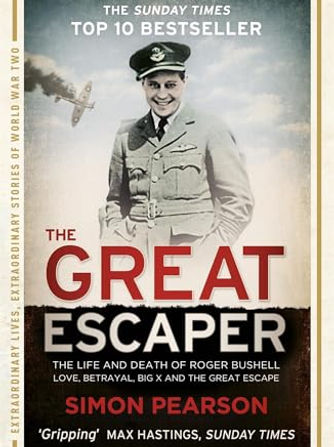
The Great Escaper by Simon Pearson Roger Bushell was 'Big X', mastermind of the mass breakout from Stalag Luft III in March 1944, immortalised in the Hollywood film The Great Escape. Very little was known about Bushell until 2011, when his family donated his private papers - a treasure trove of letters, photographs and diaries - to the Imperial War Museum. Through exclusive access to this material - as well as fascinating new research from other sources - Simon Pearson, Chief Night Editor of The Times, has now written the first biography of this iconic figure. Born in South Africa in 1910, Roger Bushell was the son of a British mining engineer. By the age of 29, this charismatic character who spoke nine languages had become a London barrister with a reputation for successfully defending those much less fortunate than him. He was also renowned as an international ski champion and fighter pilot with a string of glamorous girlfriends. On 23 May, 1940, his Spitfire was shot down during a dogfight over Boulogne after destroying two German fighters. From then on his life was governed by an unquenchable desire to escape from Occupied Europe. Over the next four years he made three escapes, coming within 100 yards of the Swiss border during his first attempt. His second escape took him to Prague where he was sheltered by the Czech resistance for eight months before he was captured. The three months of savage interrogation in Berlin by the Gestapo that followed made him even more determined. Prisoner or not, he would do his utmost to fight the Nazis. His third (and last escape) destabilised the Nazi leadership and captured the imagination of the world. He died on 29 March 1944, murdered on the explicit instructions of Adolf Hitler. Simon Pearson's revealing biography is a vivid account of war and love, triumph and tragedy - one man's attempt to challenge remorseless tyranny in the face of impossible odds.

A Willingness to Die by Brian Kingcome In 1938 Brian Kingcome joined the Raf with a permanent commission and was posted to No.65 Fighter Squadron at Hornchurch, soon to be equipped with the Spitfire, and so it came about that Brain flew the Spitfire throughout the war. He became acting Co for No.92 Squadron at Biggin Hill and led over sixty operations., achieving the highest success rate of any squadron in the Battle of Britain. In May 1943 Brian joined Desert Air Force in Malta and took command of 244 Wing. At this time he was confirmed Flight Lieutenant, acting Squadron Leader, acting Wing Commander and at twenty-five was one of the youngest Group Captains in the Royal Air Force. Brian Kingcome may have been the last Battle of Britain Pilot of repute to put his extraordinary story into print; looked upon by other members of his squadron as possibly their finest pilot, his nonetheless unassuming memoirs are related with a subtle and compassionate regard for a generation who were, as he felt, born to a specific task. Brian's memoirs have been edited and introduced by Peter Ford, ex- National Serviceman in Malaya.

Fly for your Life by Larry Forrester Fly For Your Life is the true story of Royal Air Force (RAF) Ace Robert Stanford Tuck. Thrust into a leadership role amidst the chaos of the Dunkirk evacuation, Tuck would distinguish himself as one of the RAF’s elite officers becoming the first Spitfire Ace. Further challenging times for Tuck would lie ahead in the coming months when Britain was in terrible danger. Nazi Germany was planning an invasion and the fighter pilots of the RAF would be at the forefront of Britain’s defence. In what would become known as the Battle of Britain; Tuck would show relentless commitment, extraordinary skill, and steely nerve when faced against the better equipped, larger German Luftwaffe. He would be shot down, crash land, and plucked out of the sea. Each time, returning to the fray to fly again. Tuck would go on to become one of the leading aces in the RAF, credited with 29 confirmed kills and decorated with the Distinguished Service Order. Earning his place in history with the immortal company of World War I aces Ball, Bishop, Mannock, and Collishaw.

Best of the Few by Michael Robinson This is a wonderful history of 92 Squadron in the first year or so of WWII. It is an absolute labour of love by the author Michael Robinson who tracked down many of 92's members from this period interviewed them and obtained never seen photos from their personal collections. This is a great book and gives a vivid picture of this squadron which was renowned for both working hard and playing hard. The text is in a very readable style and combined with the wealth of photos make for a worthy history of this great unit. Sadly the print run for this title was small due to it being self published and therefore copies command fairly high prices on the secondhand market. However it is well worth tracking down and spending the high price for this superb history of 92 in the early stages of WWII. A must for anyone with a serious interest in either 92, the Few or the Battle of Britain.

The War Diaries of Neville Duke The name of Neville Duke is well-known in aviation circles, not only as a successful wartime fighter pilot, but as a peace time test pilot with the Hawker Aviation Company. During his time in the south of England, North Africa and Italy, he kept a diary. The diaries reveal the innermost thoughts of a fighter pilot as he managed to cope with everyday life and death in a variety of opponents.

Confessions of a Phantom Pilot by Tug Wilson ‘The Confessions of a Phantom Pilot’ is the true story of a young RAF pilot who gets his dream to fly the old dirty workhorse fighter of the Cold War. From the first flight where he thought the jet was trying to kill him, through to his final trip of leading eight aeroplanes on a front line fighter squadron, you will relive his thoughts, feelings and anxieties as he stumbles his way through each flight relying on a bit of skill and a lot of blind luck. In essence, it is a love letter to the Phantom from a star-struck boy who felt like he was way out of his depth at the beginning of their affair. You will share stories of the outrageous drinking culture that was a major part of Cold War front-line operations, and marvel at how he didn’t do himself some serious damage either in or out of the cockpit. This is how it feels to be a front-line fighter pilot – the triumphs and the disasters are all laid out here in a completely open and honest way as the author looks back with a certain sense of nostalgia and mild embarrassment. What a blast though!

Confessions of a Flying Instructor by Tug Wilson After surviving three years flying the RAF’s greatest and scariest fighter (the mighty Phantom), Tug Wilson tried his hand at teaching some of the flying skills he probably should have known when he was on the Cold War front-line. Despite being slightly more mature and having the responsibility of teaching, and looking after, trainee pilots and navigators in the cockpit of a Hawk fast-jet trainer, Wilson manages to almost kill himself (again) and at least one of his students. This book build on the insecurities, amazement, and pure unadulterated joy that the author felt while flying aircraft in his beloved RAF. It is an open and honest account of his professional and personal life, much in the style of his first book―'Confessions of a Phantom Pilot’ (which has been described as a “Cracking good read” by Tug, his family, and all his mates from the Phantom that were happy to be mentioned in it. Ever wondered what a fast-jet pilot goes through while learning the intricacies of air-defence and low-level flying? Or even how to cheat in air combat? ‘Confessions of a Flying Instructor’ is a personal examination of an often overlooked aspect of the RAF.

Confessions of a Hornet Pilot Tug Wilson grew up in North Yorkshire dreaming of becoming a fast-jet pilot. In 1985 that dream came true when he joined the RAF. He was selected to fly the mighty Phantom for his first tour, and after three years raging around the frontline over Germany, he became a tactics and flying instructor on the Hawk T1A. Following this, he was extremely lucky to secure an exchange tour with the US Marine Corps flying the legendary F-18 Hornet in California. His final flying tour was on the Tornado F3 before a heart condition curtailed his fun. He now tells flying stories for a living.

Rate of Climb by Rick Peacock-Edwards Rick Peacock-Edwards has led different lives at different times, but through it all has used a bonus in life nowadays often overlooked: he has consistently enjoyed himself. One of three brothers of outstanding South African Battle of Britain pilot F/O S R 'Teddy' Peacock-Edwards, his subtle and compassionate regard for a generation of wartime aircrew is clear: "As the proud son of one of the 'Few', their selfless daring has inspired me throughout my life. Importantly, they influenced my decision to become an airman in the Royal Air Force, to become a fighter pilot like my father, and to live life with spirit as they had lived their lives. It is essential that their experiences live on." Rate of Climb, his original and continually entertaining biography, drawing on previously unpublished family and archival material, shows Rick in complete command of his primary subject: flying. A leading ex-RAF fighter pilot to his fingertips, he flew the Lightning, Phantom, Tornado F2/3 and other high-performance aircraft, and served in senior-ranking positions in the UK, Germany and the US. During a varied and distinguished career he was closely associated with the Eurofighter Typhoon programme and was appointed as the Royal Air Force Inspector of Flight Safety. He ably demonstrated his uncommon skill and determined leadership during the Cold War era, first Gulf War and elsewhere. A past master of The Honourable Company of Air Pilots, he is a Fellow of the Royal Aeronautical Society and the immediate past vice chairman of the Royal Air Force Club in London. He is equally as engaged in his post-RAF career as he was when a serving officer. This is an action-packed account of a foremost flyer's life with endless good stories, and a colourful cast of characters to match. Rick's compelling recollections in Rate of Climb reveal a life of considerable achievement, in a very personal book capturing the ties of airmanship that the author has been privileged to share. A must for all lovers of derring-do in the air.

Gnat Boys by Rick Peacock-Edwards The Folland Gnat was used by the RAF mainly in the advanced training role, in the 1960s and 70s, where it proved to be an ideal lead-in trainer for high-performance aircraft such as the iconic Lightning, the first RAF supersonic fighter. It was also the aircraft used by the famous Yellowjacks formation aerobatic team, formed in 1964, the forerunner of the world-famous Red Arrows team which was equipped with the Gnat for over a decade before being replaced by the Hawk in 1980. Lesser known, the Gnat was also used as a lightweight fighter by both the Indian and Finnish air forces. In the case of India, the Gnat, later called the ‘Ajeet’ (Midge), saw combat experience in the Indo-Pakistani wars, most notably in the Battle of Boyra. Today, over 60 years since the aircraft first flew, several Gnats continue to be operated from North Weald Airfield in Essex by the Heritage Aircraft Trust under the brand, the Gnat Display Team. This book relates the history of the aircraft and includes many fascinating and untold stories by those who flew the aircraft, many of them well-known and distinguished aviators including those from the Indian and Finnish air forces. There is also a focus on the civilian life of the Gnat in the 21st century with accounts from those who continue to fly the aircraft with the Heritage Aircraft Trust. Gnat Boys is set to become one of the most sought-after books about aviation covering a very special era in aviation history, a must read for everyone with an interest in stories of human trial and endeavour.
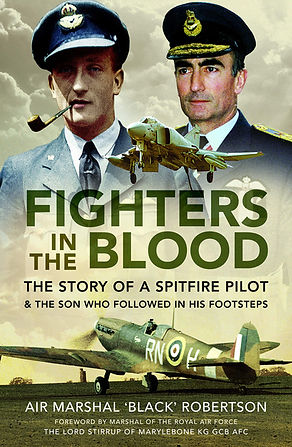
Fighters in the Blood by Black Robertson This is no ordinary memoir. Moving back and forth through time, two stories with fascinating parallels gradually unfold. One is of a Second World War Spitfire ace whose flying career came to a premature end when he was shot down and lost an eye, the other is about his progeny, a second generation fighter pilot who rose to the rank of air marshal. There were times when the lives of both father and son, Robbie and Black Robertson, hung in the balance occasions when survival was simply a matter of luck. The narrative is unique in its use of two separate and distinct voices. The author s own reminiscences are interwoven with those of his father recorded more than thirty years ago. Intensely personal and revealing, controversial too at times, this memoir is above all about people. There is a final irony though. The son spent a lifetime training for the ultimate examination one that despite strictly limited preparation his father passed with flying colours. To Black Robertson s eternal regret he was never able to put his own training to the test. His father was awarded the DFC and retired as a flight lieutenant after five years or so. He himself served for nearly thirty-six years, earned a Queen s Commendation, an OBE and CBE and served as an ADC to HM The Queen. But after reaching almost the top of the RAF tree, in one important sense he retired unfulfilled; his mettle was never tested under fire. Anyone interested to know more about flying, about the RAF, about leadership, about character even, need look no further than this beautifully crafted, immensely readable account.

A Spitfire Named Connie by Black Robertson A Spitfire Named Connie is an exciting, rollercoaster of a story. A prequel to Fighters in the Blood, it tells how ‘Robbie’ Robertson begins his RAF training during the Battle of Britain and the Blitz. As he learns his trade, he is soon rubbing shoulders with Fighter Command heroes, amongst them Brian Kingcome, ‘Ginger’ Lacey and Bob Stanford Tuck. Moving from 111 to 72 Squadron, he opens his account against the Luftwaffe in the spring of 1942. Six months later, as he adds further to his score, the action moves to the skies over North Africa. It is there that tragedy strikes. Wounded and shot down by one of the Luftwaffe’s most celebrated Experten, his Spitfire crashes to the ground. Found lying near the wreckage by an army patrol, Robbie is moved from casualty clearing stations to hospitals across Tunisia and Algeria as doctors try desperately to save his sight. Finally, unable to stand the pain any longer, he reluctantly agrees to the removal of his right eye. A slow recovery and eventual return to the UK is no compensation for the end of his flying career. Desk-bound for the remainder of the war, the second and more poignant period of his RAF life begins. The young schoolgirl, Connie Freeman, with whom he has been in regular correspondence since her evacuation, becomes his wife. It is literally hundreds of Robbie’s letters that form the basis of this powerful, moving and emotional story. Together with his own and Connie’s diaries, correspondence from RAF colleagues and his flying logbook, they bring a unique authenticity to this highly-charged tale. A Spitfire Named Connie reads like a novel, filled with excitement, pathos and compassion. Yet, incredible as it may seem, almost every word is true.

Flying Through the Ranks by Black Robertson The inspiration for this brilliant anthology is the ‘I Learnt About Flying from That’ articles that first appeared in the RAF Flight Safety magazine Air Clues in the 1940s and continues to feature in the magazine to this day. Flying Through the Ranks gets a five-star start with an extraordinary tale from a Marshal of the Royal Air Force and continues in the same vein. Men and women of every rank – pilots, navigators, engineers, an RAF Regiment officer and airmen too – reveal similar intriguing experiences in both war and peace. Exciting, amusing, poignant too at times, their stories say as much about the development of the RAF and the making of the Cold War warrior as they do about the individuals themselves. It’s impossible not to be moved by these rousing stories of courage and leadership, risk-taking and pressure, invention and adventure. Starkly exposing human fallibility at times, they highlight the skill and improvisation central to the flying business. Other common themes across some uncommon accounts are the sheer exhilaration of flying, the role that luck plays in everyone’s life and the unspoken bond of respect that binds aviation professionals together.
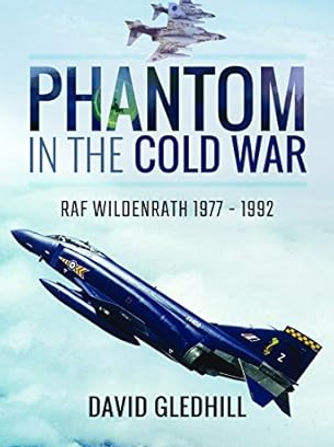
Phantom in the Cold War by Dave Gledhill The McDonnell Douglas F4 Phantom was a true multi-role combat aircraft. Introduced into the RAF in 1968, it was employed in ground attack, air reconnaissance and air defence roles. Later, with the arrival of the Jaguar in the early 1970s, it changed over to air defence. In its heyday, it served as Britain s principal Cold War fighter; there were seven UK-based squadrons plus the Operational Conversion Unit, two Germany-based squadrons and a further Squadron deployed to the Falkland Islands. Phantom in the Cold War focuses predominantly on the aircraft s role as an air defence fighter, exploring the ways in which it provided the British contribution to the Second Allied Tactical Air Force at RAF Wildenrath, the home of Nos. 19 and 92 Squadrons during the Cold War. As with his previous books, the author, who flew the Phantom operationally, recounts the thrills, challenges and consequences of operating this sometimes temperamental jet at extreme low-level over the West German countryside, preparing for a war which everyone hoped would never happen.

Per Ardua by Dave Gledhill and Phil Keeble Flying the McDonnell Douglas F-4 Phantom was a young man’s dream but the path from “civvy street” to operational on a fighter squadron was long, arduous and beset with obstacles. To succeed meant the chance to fly one of the most iconic combat aircraft that ever took to the air but not every fledgling aviator who began the journey fulfilled their ambition to wear the coveted “Op. badge”. “Per Ardua – Training an RAF Phantom Crew” describes how Cold War aircrew assimilated the skills needed to fly and fight the complex fighter jet. It follows the progress through every stage and explains why it cost millions to train each pilot and navigator. Philip Keeble and David Gledhill, both former Phantom aircrew, recount the challenges and the emotions encountered during the rigorous training process in a frank yet light hearted way that will leave you wondering how anyone achieved the goal

Operational Test, by Dave Gledhill and Dave Lewis The process to deliver a modern combat aircraft from concept to introduction to service is often measured in decades. Described as a weapon system, modern designs such as the Eurofighter Typhoon are intricate jigsaws with a fusion of new techniques and sometimes unproven, emerging technologies. By the time the new weapons system reaches the front line it will have been tested by the manufacturer, evaluated by test pilots and assessed by service pilots. There have been examples of success but some spectacular failures with projects cancelled late in development. This book will investigate why and takes you from the original requirement through the complex testing and evaluation process showing recent examples of the path to declaring a new combat aircraft operational on the front line. It will look at how today’s test organisations have matured to meet the task and investigate the pressures they face. It will also look at real-life examples of systems testing. David Gledhill and David Lewis, both experienced test evaluators, will uncover the reasons why some aircraft serve on the front line for years before becoming truly effective in their role.

Fighters over the Falklands by Dave Gledhill “Fighters Over The Falklands” looks at how the Falkland Islands are defended by our air defence fighter aicraft. Covering the period immediately after the war when the Phantom was our front line fighter, through to the departure of the Tornado F3s, it concludes with why the Typhoon will be an exceptional replacement. Pictures taken during the author’s two tours of duty on the Islands in 1985 and 1994 capture daily life. From the first detachments of Phantoms and Rapiers operating from a rapidly upgraded RAF Stanley airfield to life at RAF Mount Pleasant, the author gives an insight into the challenges he faced as the Commander of the Tornado F3 unit. It also looks at how front line crews provided Quick Reaction Alert with a look at day to day flying operations and working with the Royal Navy, Army and Air forces. The book explores the facts and emotions of operating in a remote and sometimes forgotten theatre of operations. It also looks at how the islanders interact with the garrisoned forces and the contrasts between the high technology military operations and the lives of the original inhabitants; namely the wildlife.

Tornado in Pictures by Dave Gledhill The Panavia Tornado was designed as a multi-role combat aircraft to meet the needs of Germany Italy and the United Kingdom. Since the prototype flew in 1974, nearly 1000 Tornados have been produced in a number of variants serving as a fighter-bomber, a fighter and in the reconnaissance and electronic suppression roles. Deployed operationally in numerous theatres throughout the world, the Tornado has proved to be exceptionally capable and flexible. From its early Cold War roles it adapted to the rigours of expeditionary warfare from The Gulf to Kosovo to Afghanistan. The early "dumb" bombs were replaced by laser-guided weapons and cruise missiles and in the air-to-air arena fitted with the AMRAAM and ASRAAM missiles. In this book David Gledhill explores the range of capabilities and, having flown the Tornado F2 and F3 Air Defence Variant, offers an insight into life in the cockpit of the Tornado. Lavishly illustrated, Darren Willmin's superb photographs capture the essence of the machine both from the ground and in the air. This unique collection including some of David Gledhill's own air-to-air pictures of the Tornado F2 and F3 will appeal to everyone with an interest in this iconic aircraft.

Defector by Dave Gledhill Colonel Yuri Andrenev, a respected test pilot is trusted to evaluate the latest Soviet fighter, the Sukhoi Su27 “Flanker”, from a secret test facility near Moscow. Surely he is above suspicion? With thoughts of defection in his mind, and flying close to the Inner German Border, could he be tempted to make a daring escape across the most heavily defended airspace in the world? A flight test against a Mig fighter begins a sequence of events that forces his hand and after an unexpected air-to-air encounter he crosses the border with the help of British Phantom crews. How will Western Intelligence use this unexpected windfall? Are Soviet efforts to recover the advanced fighter as devious as they seem or could more sinister motives be in play? Defector is a pacy thriller which reflects the intrigue of The Cold War. It takes you into the cockpit of the Phantom fighter jet with the realism that can only come from an author who has flown operationally in the NATO Central Region

Deception by Dave Gledhill When a hostage is snatched from the streets of Beirut by Hezbollah terrorists it sets in train a series of events from the UK to the Middle East that end in the corridors of power. A combined air operation is mounted from a base in Cyprus to release the agent from his enforced captivity. Phantom and Buccaneer crews help a special forces team to mount a daring raid, the like of which has not been attempted since Operation Jericho during World War 2. With Syrian forces ranged against them and Israeli and American friends seemingly bent on thwarting them, the outcome is by no means certain. As in his other novels David Gledhill takes you into the cockpit in this fast paced Cold War tale of intrigue and deception.

Impact by Dave Gledhill At the peak of his career, Nick Gleason is a loner struggling with his conscience. Flying the Jaguar bomber in a Cold War West Germany he begins to question the morality of his nuclear role. Two British fighter aircraft, a Phantom and the Jaguar piloted by Gleason, converge at low level over the Osnabruck Ridge on the North German Plain in West Germany during the Cold War. One is armed with a practice thermonuclear bomb, the other simply intercepting a formation of German fighter bombers on a routine training exercise but their flight paths are destined to cross. Events have been far from routine as the crews are drawn towards the confrontation that threatens to jeopardise their very existence. It seems that a collision was inevitable from the outset but could the, seemingly, inexorable chain of events have been broken or was destruction predestined? The countdown to impact is underway.

Infiltration by Dave Gledhill The year is 1985 and the Cold War threatens to turn hot. A Soviet agent is sent to join a Soviet Carrier Battle Group in the North Atlantic, his mission to plant a sensor to track British nuclear powered submarines as they set off to patrol the oceans. To mask his bold assignment a complex diversionary operation is launched from the decks of the aircraft carrier “Kiev”, the pride of the Soviet Northern Fleet. The target; British military radar installations on the coastline. Commanders respond by deploying Phantom fighters to a remote base in western Scotland to assist the Quick Reaction Alert forces where a tense stand-off develops. Could these be the opening moves of World War 3 or will the intrepid fighter crews foil the Soviet efforts? As with all his books David Gledhill takes you into the cockpit with unparalleled realism for another high octane adventure in the skies.

Maverick by Dave Gledhill Combat veteran Major Pablo Carmendez holds a grudge against his former adversaries. Diverting his armed Skyhawk fighter-bomber from a firepower demonstration he flies eastwards towards the Falkland Islands intent on revenge. What is his target and will he survive the defences alerted of his intentions? Crucially, will his plan wreck delicate negotiations between Britain and Argentina designed to mend strained relations? Are Government officials charged with protecting the islanders' interests worthy of that trust or are more sinister motives in play? Maverick is an aviation thriller set in the remote outpost in the South Atlantic Ocean that takes you into the cockpits of the Phantom fighters based on the Islands where you will experience the thrills of air combat as the conspiracy unfolds.

Groundcrew Boys by Dave Gledhill with Simon Jakubowski This collection of stories from Royal Air Force groundcrew reveals the critical operations and thrilling drama of Cold War hangars and airfields. Groundcrew Boys shares true stories of life on the flight line, written by those who served. Twenty engineers recall stories from combat zones around the world, working with aircraft as diverse as the Phantom, the Shackleton and the Sea Harrier. From humorous and ribald tales to thought provoking remembrances, these stories leave no doubt about the dedication and professionalism of those who served. Aviation author David Gledhill presents helpful historical context for each story, while numerous photographs, many from the groundcrew themselves, help bring their experiences to life.

The Phantom in Focus by Dave Gledhill Have you ever wondered what it was like to fly the Phantom? This is not a potted history of an aeroplane, nor is it Hollywood glamour as captured in Top Gun. This is the story of life on the frontline during the Cold War told in the words of a navigator who flew the iconic jet. Unique pictures, many captured from the cockpit, show the Phantom in its true environment and show why for many years the Phantom was the envy of NATO. It also tells the inside story of some of the problems which plagued the Phantom in its early days, how the aircraft developed, or was neglected, and reveals events which shaped the aircraft's history and contributed to its demise. Anecdotes capture the deep affection felt by the crews who were fortunate enough to cross paths with the Phantom during their flying careers. The nicknames the aircraft earned were not complimentary and included the 'Rhino', 'The Spook', 'Double Ugly', the 'Flying Brick' and the 'Lead Sled'. Whichever way you looked at it, you could love or hate the Phantom, but you could never ignore it for its sheer power and lethal payload. The Phantom in Focus: A Navigator's Eye on Britain's Cold War Warrior is unique in that the author flew in the legendary Phantom in the front line and captured beautiful and amazing unpublished photographs that will appeal to historians, military specialists and modellers alike.

Ultimatum by Dave Gledhill The year is 1987. The Cold War is thawing. NATO and the Warsaw Pact still face-off across the Inner German Border but there are unmistakable signs that change is inevitable. As world leaders wrestle with a new political reality, sinister forces are set in play which might destabilise the embryonic peace process. Terrorist groups, bent on undermining democracy are bolstered by improbable collaborators and seek out new targets, determined to wreak havoc. As events unfold at breakneck speed across Europe, only a small force of British Phantom fighter jets holding Quick Reaction Alert, stand ready to avert the impending crisis. Can the intrepid fighter crews thwart a brazen plot to assassinate the British Prime Minister which if it succeeds, will threaten the very heart of British democracy? Can terrorism triumph over democracy and have the terrorists been aided by an unlikely cohort? Only time and a modicum of good luck will tell. Ultimatum, the latest novel in the Phantom Air Combat series, is a fast paced, aerial thriller in which David Gledhill delivers another gripping tale of Cold War intrigue, at a level of detail that only someone who flew Phantoms on the front line, can deliver.

Provocation by Dave Gledhill With tensions rising in post-war Europe, the Soviet Union closed the air corridors to Berlin, the former German capital, in a bid to starve the population into submission. The western allies responded by mounting the largest air supply operation the world had ever seen which would become known as the “Berlin Airlift”. Step forward into the 1980s with the Cold War at its height. A NATO reinforcement exercise held at a British airbase in West Germany, brings British, American and French fighter crews together to practice the air corridor policing mission. When a Pembroke transport aircraft engaged in a covert reconnaissance mission is intercepted by a Mig fighter and forced to land in East Germany, events escalate. Will the crew become a pawn in the relentless confrontation as the Soviets increase the rhetoric? Have western military plans been compromised by the unexpected aggression? Provocation is a fast moving thriller that replays the tensions of the Cold War and its dark undertones. As with his other novels, David Gledhill takes you into the cockpit of the Phantom fighter jet to experience the action first hand.

Black Arrow Blue Diamond, Leading the Legemndary RAF Flying Display Teams by Brian Mercer Brian Mercer is one of the most outstanding post-war RAF fighter pilots and in this eminently readable autobiography he recaptures life as it was in the days of transition from flying piston-powered aircraft to jet power. His flying and leadership skills resulted in a long association with what was then considered as the finest aerobatic display team in the world - Treble One Squardron's 'Black Arrows'. Flying the elegant black Hawker Hunters in large formation displays was no easy task and the author explains in great detail how their legendary precision was achieved, revealing many exciting incidents en route. When Treble One's Hunters were replaced with the supersonic Lightining fighter, it soon became clear that these superfast aircraft were not suited to close-up display flying. Brian was then asked to form a new RAF display team and continue with Hunters. This was to become the No. 92 Squadron's Blue Diamonds', who inherited the star role. Faced with the fact that future promotion within the RAF would move him from cockpit to desk, Brian elected to join then then fledgling airline, Cathay Pacific. His story continues with many exciting incidents flying from the company's home base at Kai Tak in Hong Kong.

F4 Phantom by Bob Prest A stone cold classic. One of the best military aviaton memoirs ever written’ Rowland White, author of Vulcan 607 ‘I only have to think Speed, and I am at 600 knots in seconds. Think Height and I am gazing down from a eight-mile-high perch within one minute. Think Freedom and I am wrested away from a dank, cold world, cloud base at 300 feet, through a brief shock of cloud to emerge into a golden blue world, another dimension, crystal clear for miles and miles’ Fighter Pilot. Robert Prest had never wanted to be anything else. And even as a boy he had set his sights on flying the awesome McDonnell Douglas F-4 Phantom. The big, twin-engined interceptor offered an irresistible combination of charisma, power and performance. Air combat, strike, gunnery, bombing and rocketry, the F-4 was jack-of-all-trades, master of most. From the lonely pursuit of Soviet intruders out over the North Sea and strength-sapping high-g dogfights, to maintaining Quick Reaction Alert on Germany’s Eastern border, ready to scramble Battle Flight at a moment’s notice, Prest and his fellow aviators stood toe-to-toe with a powerful opponent. But the defence of the West came at a cost, and comrades in arms would pay with their lives. No other book so vividly brings to life the high-pressure, high stakes, high-speed world of an RAF fighter pilot on the Cold War frontline. But it’s more than that. In capturing a sense of the wonder and magic of flying, Prest’s book ranks aviation classics from writers like Saint-Exupéry, Richard Bach, Cecil Lewis and Ernest Gann. ‘The best book I’ve ever read about flying fast jets for the Cold War RAF. Both thrilling and elegaic, F-4 Phantom makes poetry of complex, exacting world of the fighter pilot. This is as close as you’ll ever get to flying the Phantom yourself.’ Rowland White, author of Vulcan 607. ‘What First Light does for Spitfires and the Battle of Britain, Robert Prest does for the F-4 Phantom in RAF service … Superbly written.’ Royal Aeronautical Society Insight

Time Flies by David Hamilton 'Time Flies: Reflections of a Fighter Pilot' retells the exploits of David Hamilton's thirty years of service in the Royal Air Force. He had a wide and varied career; flying Lightnings to defend UK airspace, operating from HMS Ark Royal in F-4 Phantoms, and defending the Inner German Border from RAF Wildenwrath. In the UK MoD he was a staff officer responsible for the Eurofighter project. He served in the First Gulf War, as the commander of a Tornado F3 Squadron deployed in Saudi Arabia, and worked as General Sir Peter de la Billiere's air advisor afterwards. He flew with and was supervisor of the Red Arrows. In NATO's Brussels Headquarters, he served as a Group Captain, formulating the Rules of Engagement for the Bosnian air campaign, and then became the deputy station commander at RAF Leuchars. Hamilton also led the Tornado F3 four-ship flypast over Edinburgh Castle as the Stone of Destiny returned to Scotland on 30 November 1996, before taking early retirement from the RAF to work in the defence industry on the Eurofighter project.

Bob Stanford Tuck - Hero of the Battle of Britain by Helen Doe The first full reappraisal of one of Britain's great fighter aces, this book examines the truth behind Tuck's 1956 biography, Fly for Your Life. It looks at the evidence behind the myths, checks out some of the exaggerated stories and reveals the real Stanford Tuck. In January 1942 Bob Tuck was the top-scoring British fighter ace with an official score of twenty-nine enemy aircraft destroyed. During the Battle of Britain his legendary prowess grew and he was posted to command a leaderless and demoralized squadron, this time flying Hurricanes. He continued to prove he was an outstanding fighter ace, gaining the rare distinction of three DFCs and then the DSO for his leadership. He was shot down over France in January 1942. In January 1944 however, around twenty POWs, including Tuck, were purged to a new camp. Still determined to escape, Tuck and a Polish officer took a risky chance and made their way east to Russian forces and thence to England. This book reveals a more complex man than the one-dimensional hero of the previous biography. Post war, he became good friends with the Luftwaffe ace, Adolf Galland, and was a key advisor with him on the film Battle of Britain, and, often made many media appearances. His health suffered in later years from the impact of his war service and his imprisonment and he died aged seventy in 1987

Smoke Trails in the Sky by Tony Bartley DFC The journals of a Battle of Britain Pilot. Tony Bartley epitomised the young, dashing fighter pilot of the Battle of Britain. Born in Ireland but educated in England, he joined the RAF at the outbreak of war. He flew Spitfires with 92 Squadron from RAF Hornchurch, first in the battle of France, then covering the Dunkirk evacuation. Later in 1940 he moved to RAF Biggin hill and flew daily over London at the height of the Battle of Britain. Bartley went on to test-fly Spitfires, them led 65 Squadron, then 111 Squadron in North Africa and also flew with the American 9th Air Force covering the Normandy landings. His account relives the close atmosphere of close knit fighter squadrons and also the respite offered by the London social life. He met and married the actress Deborah Kerr and moved to Hollywood where he became a screen-writer and later a film company executive.

Kittyhawk Pilot by J.P.A. Michel Lavigne. James F. Edwards Jimmy Edwards, as the old-timers around Battleford call him, grew up in the historic town of Battleford, Saskatchewan; went to school in a building that housed the first government of the Northwest Territories and experienced all the things that went with the Great Depression of the 1930's. From the beginning he demonstrated the ability of an achiever--a quality he took with him into the Royal Canadian Air Force and on into the Western Desert of North Africa where he went to become a pilot in the 260 Squadron of the RAF. Artwork on the jacket, by Jeff Pritchard of Delta, BC, sets the mood for Kittyhawk Pilot, the true story of J. F. (Stocky) Edwards, Canada's top living fighter pilot. Black and white photographs.

Biggin on the Bump by Bob Ogley The Most Famous Fighter Station in the World